Last Updated on April 23, 2023 by Adrienne
We’ve now reached the point in my Thailand recaps when I get to share the main attraction…the elephants! Don’t get me wrong, I was excited to see the country’s beautiful temples and beaches too, but it was elephants that first sparked my interest in visiting Thailand.
For as long as I can remember, I have been obsessed with pachyderms. It’s long been on my travel bucket list to visit Southeast Asia and wrap my arms around one. But even before I really knew what elephants have to go through to prepare them for life in tourist camps (spoiler alert: extreme physical abuse), I had some sense that it probably wasn’t the nicest life for them.
As soon as I learned about Elephant Nature Park, a sanctuary near Chiang Mai dedicated to rescuing elephants who have been working in the tourism and logging industries and letting them live the rest of their lives in a more natural setting, I knew it was a place I absolutely had to visit.

First, I want to address the elephant, if you will, in the room. Many of the elephants at Elephant Nature Park are obviously physically handicapped from the abuse they endured and people have asked me if it was depressing to be around all these injured elephants. The answer is definitely not. Although some of them have absolutely heart-breaking backstories (one of the park’s most beloved elephants, Jokia, is blind because both of her eyes were shot by her owner when she tried to check on the stillborn baby she had just given birth to), the elephants are clearly loving their new lease on life so much that is hard to feel anything but hopeful and happy seeing these beautiful creatures reclaim the lives they were meant to live.
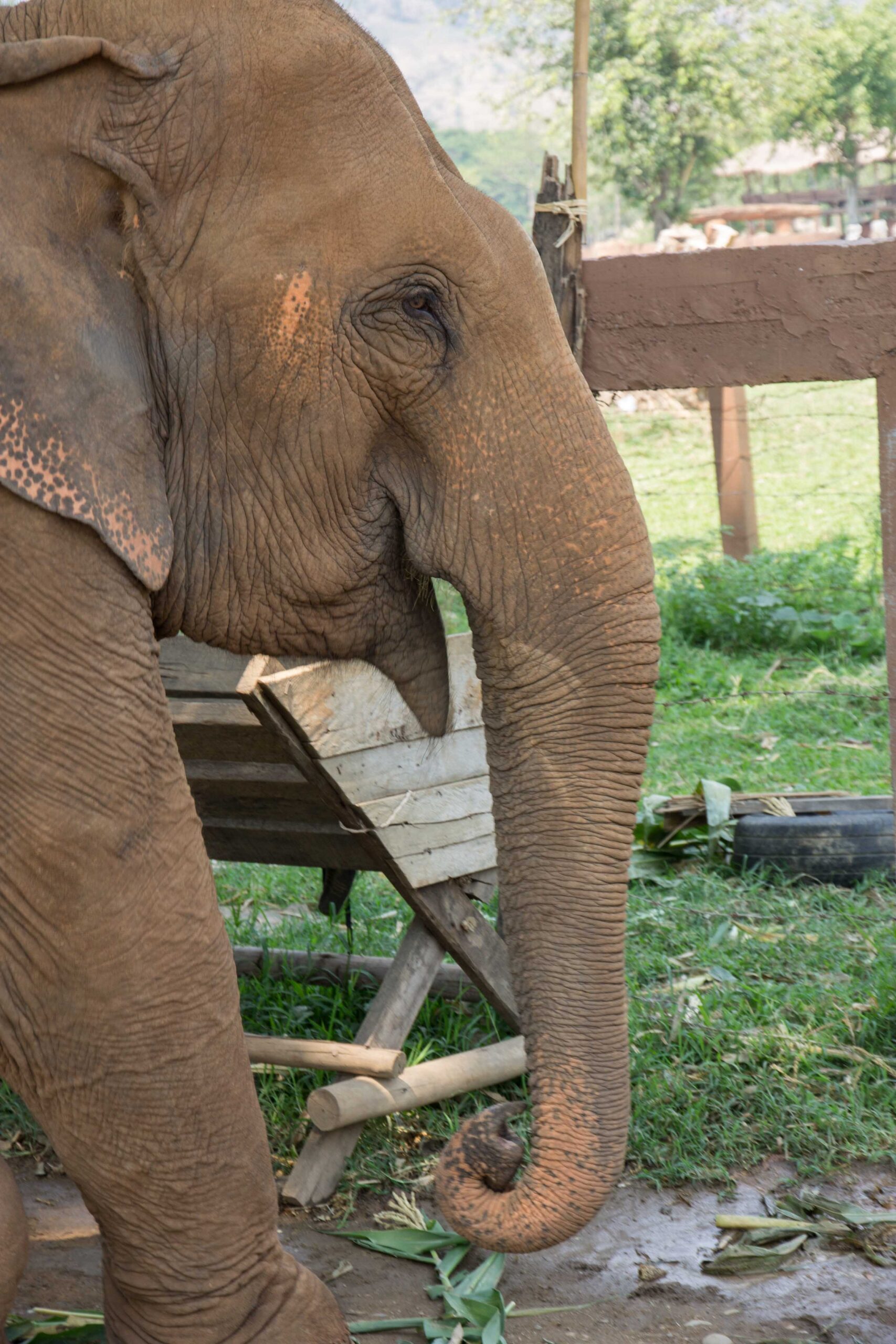
My favorite elephant, Kabu, had her left front leg broken when she was a child working in the logging industry. It was never set properly and now it’s noticeably bent. She makes do, though, and our tour guide shared with us that even though she normally walks around very slowly, she’s able to run at the buffalo when they try to steal her food. All the elephants at ENP have a sign that describes their backstory and Kabu’s sign says “Do not feel sorry for her. She does not feel sorry for herself. She is a survivor.” I just love that quote and I think it really applies to all of the elephants here: they may look like they need your pity, but they don’t. They’ve survived a tough past, but now they have a future of freedom and friends to look forward to, and you can tell they know it.
How to Visit Elephant Nature Park
Elephant Nature Park is located in the mountains a little over an hour outside of Chiang Mai, a university town in northern Thailand that is well worth a visit in its own right.
There are a variety of options for visiting Elephant Nature Park including day trips from Chiang Mai, two day/one night stays (what we did) and, for the truly elephant-obsessed, week-long “volunteer” programs (you do have to pay something for these, but they’re much cheaper per day than the other kinds of visits).
What It’s Like to Spend a Day at Elephant Nature Park
After pickup from your hotel in Chiang Mai, you’ll drive to Elephant Nature Park while you watch a video that covers safety practices at the park and describes the abuse elephants who work in the trekking camps endure.
Once you reach the park you’ll be split into groups of about 10 people and assigned a guide who will lead you around the park for the day and give you the opportunity to meet, feed and bath certain elephants.
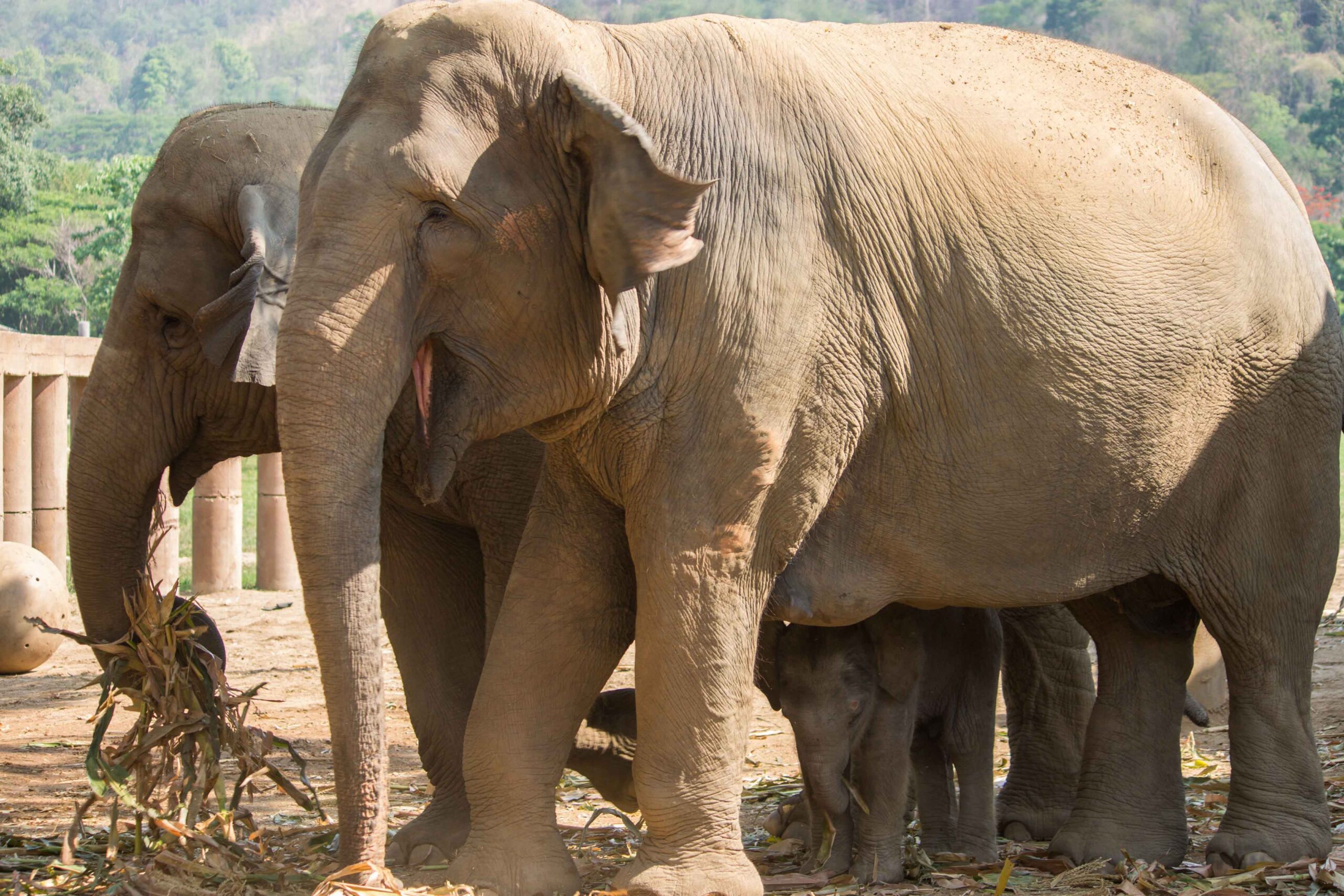
Some of the elephants at ENP are too damaged from their past abuse to interact with visitors, but many of them are happy to be petted and fed by people. The guides know which elephants are safe to approach, so sticking with them is important. In addition to the guides, each elephant has a mahout, a person who spends most of their life with one elephant and is devoted to that elephant and its care. (Dok Mai really wants the bananas in her mahout’s arms!)

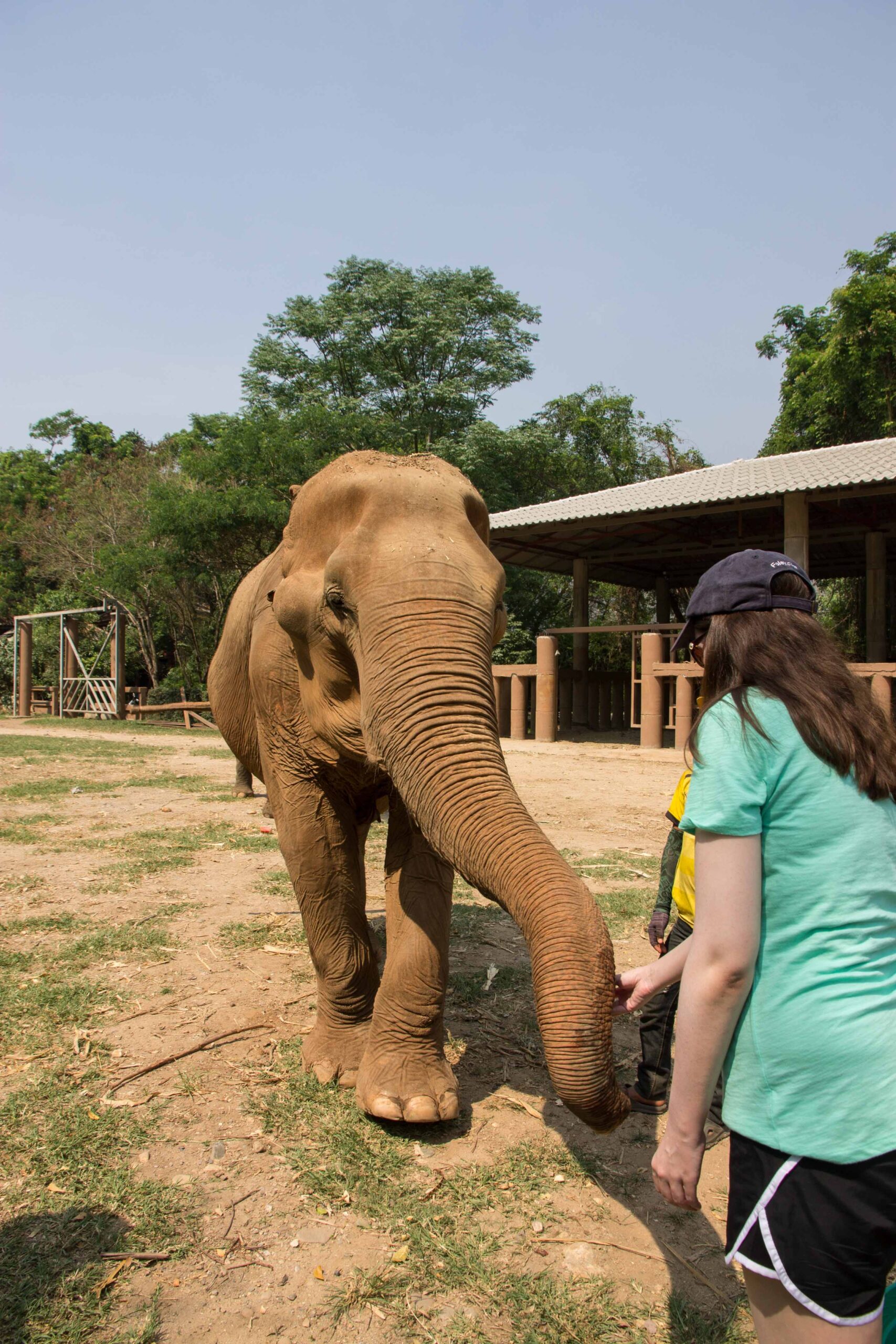
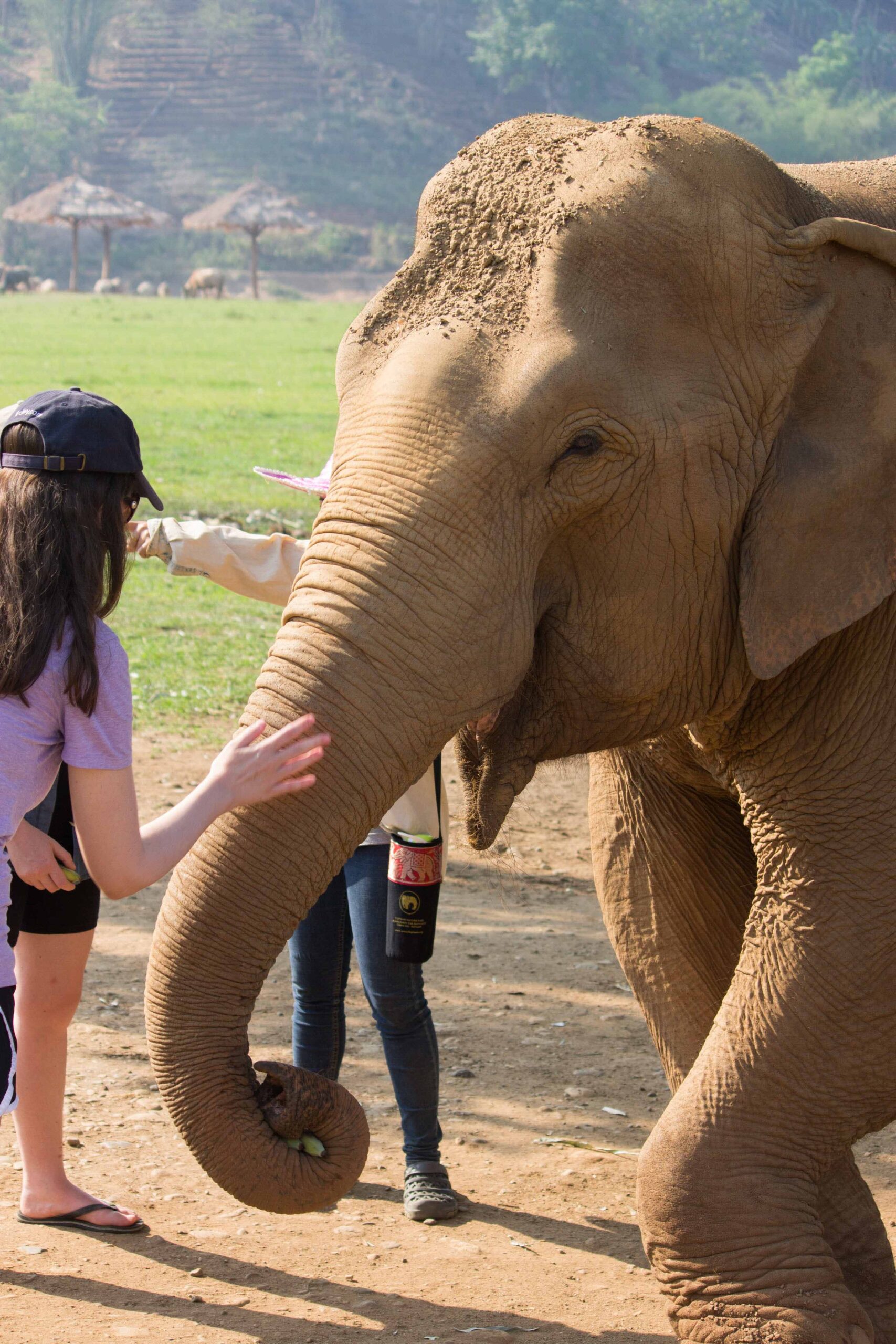
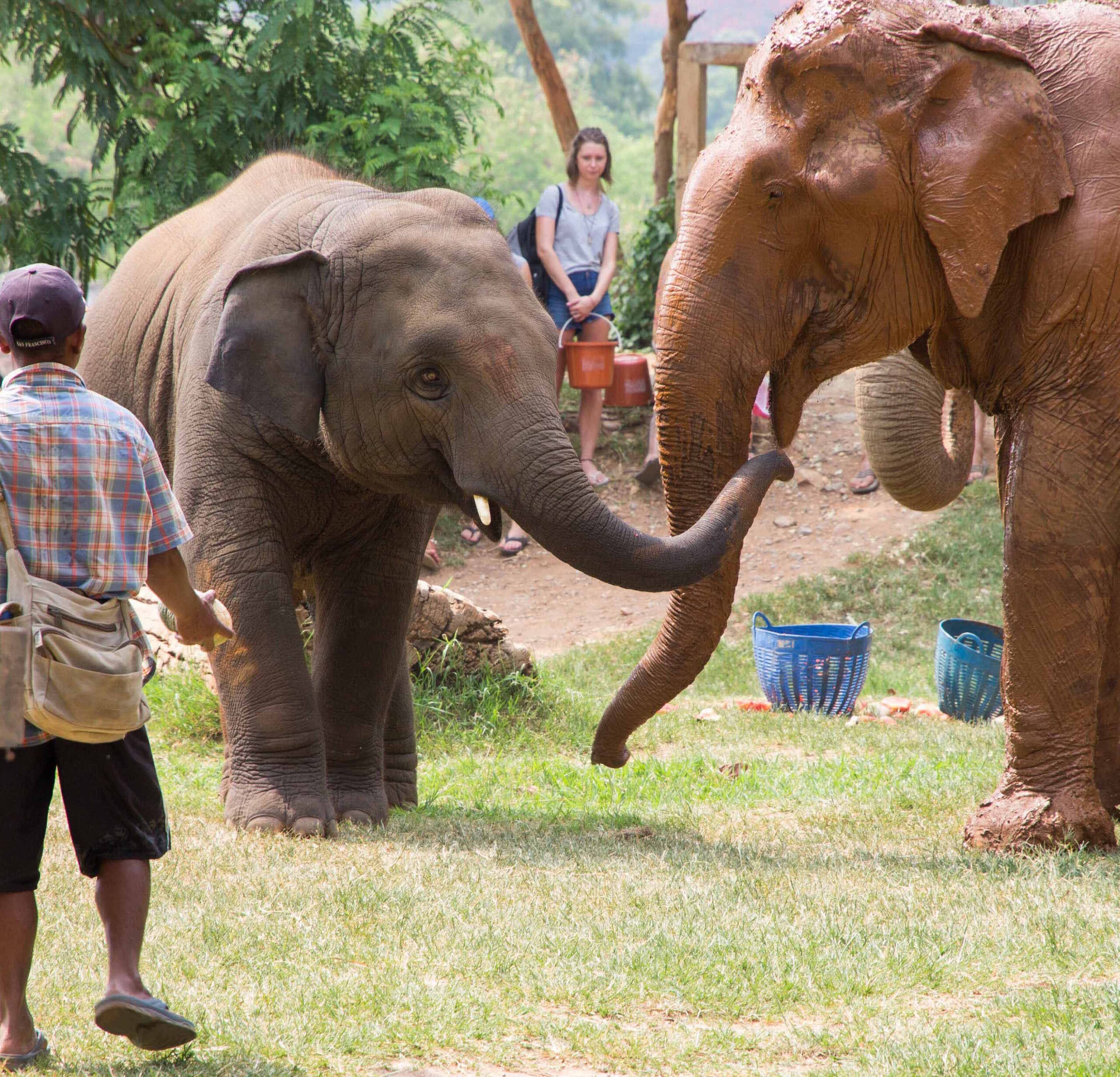
We began our exploration of the park by greeting Mae Jan Peng (known as Champagne, based on the English word her name vaguely resembles). She’s one of the most distinctive elephants in the park with her jagged ears and a hole in one ear from her logging days that now displays a flower “earring” her mahout made her. Champagne doesn’t like to be fed by anyone but her mahout, but we watched her chow down on a basket of watermelon and got to pet her trunk and take photos with her.

We also met her friend Saza, who happily accepted bananas and watermelon from us. Saza was skinny and decrepit when she arrived at ENP last year, but is now happy and plump and ate everything we offered.
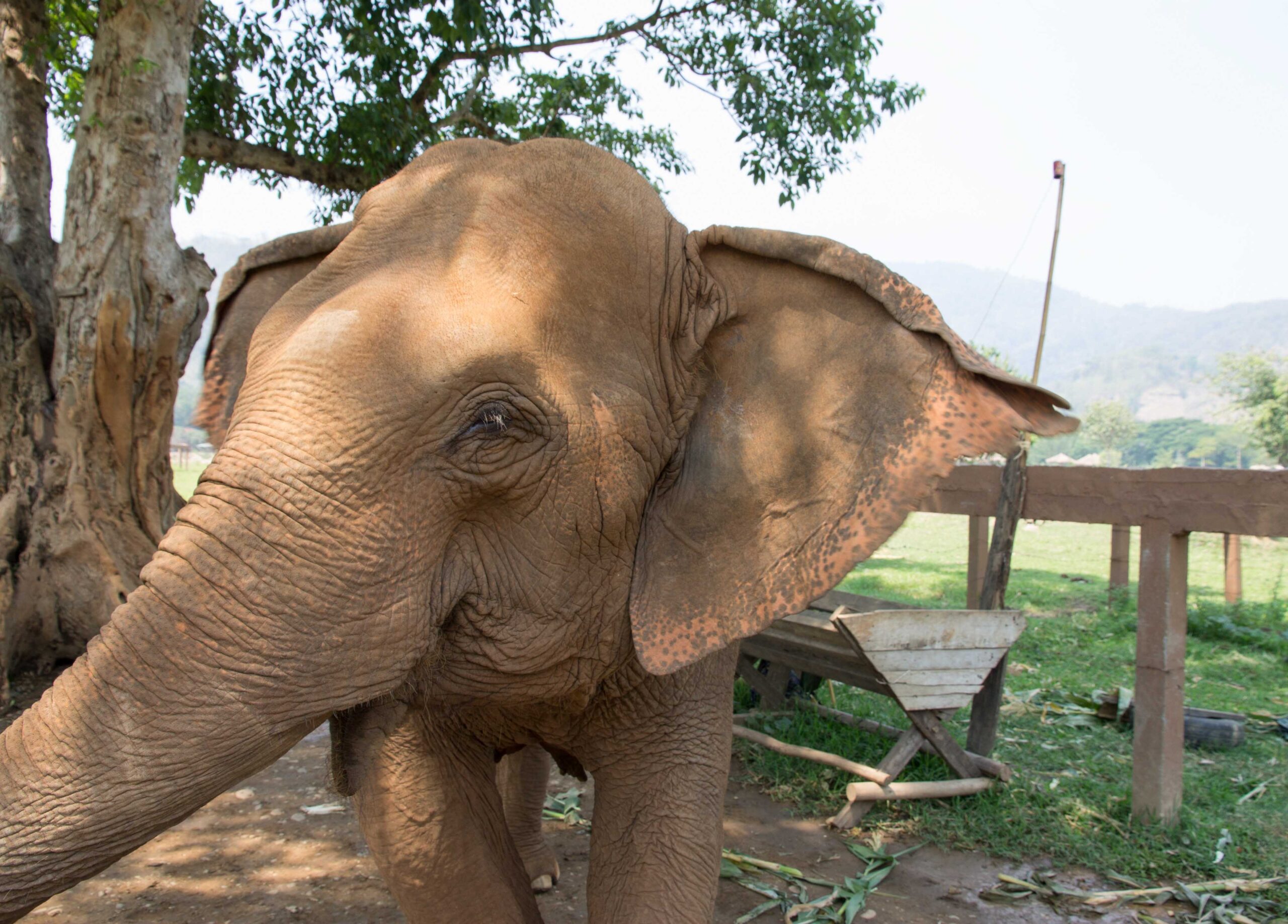
We then took a walk around the park grounds with our guide and met other elephants including Kabu, the elephant I mentioned above with the injured leg. Despite her physical limitations, Kabu has the most beautiful personality and her smiling face (and eagerness to grab the bananas out of our hands!) instantly stole my heart.
Like humans, elephants have distinct personalities and form friendships. Some elephants, like Kabu, are loners, while others will hang out in pairs or form matriarchal herds, based around a young elephant and his or her mom, with the other adult females serving as nannies. Adult males live alone at ENP, just as they do in the wild. Like human friendships, these relationships change over time.
One of the most heart-warming stories we heard was about how the blind elephant Jokia, who lost her long-time best friend Mae Perm (the park’s very first rescue elephant) to old age earlier this year, was warmly welcomed into the family group based around Navann (a mischievous young elephant born at ENP) and is now inseparable from that herd.
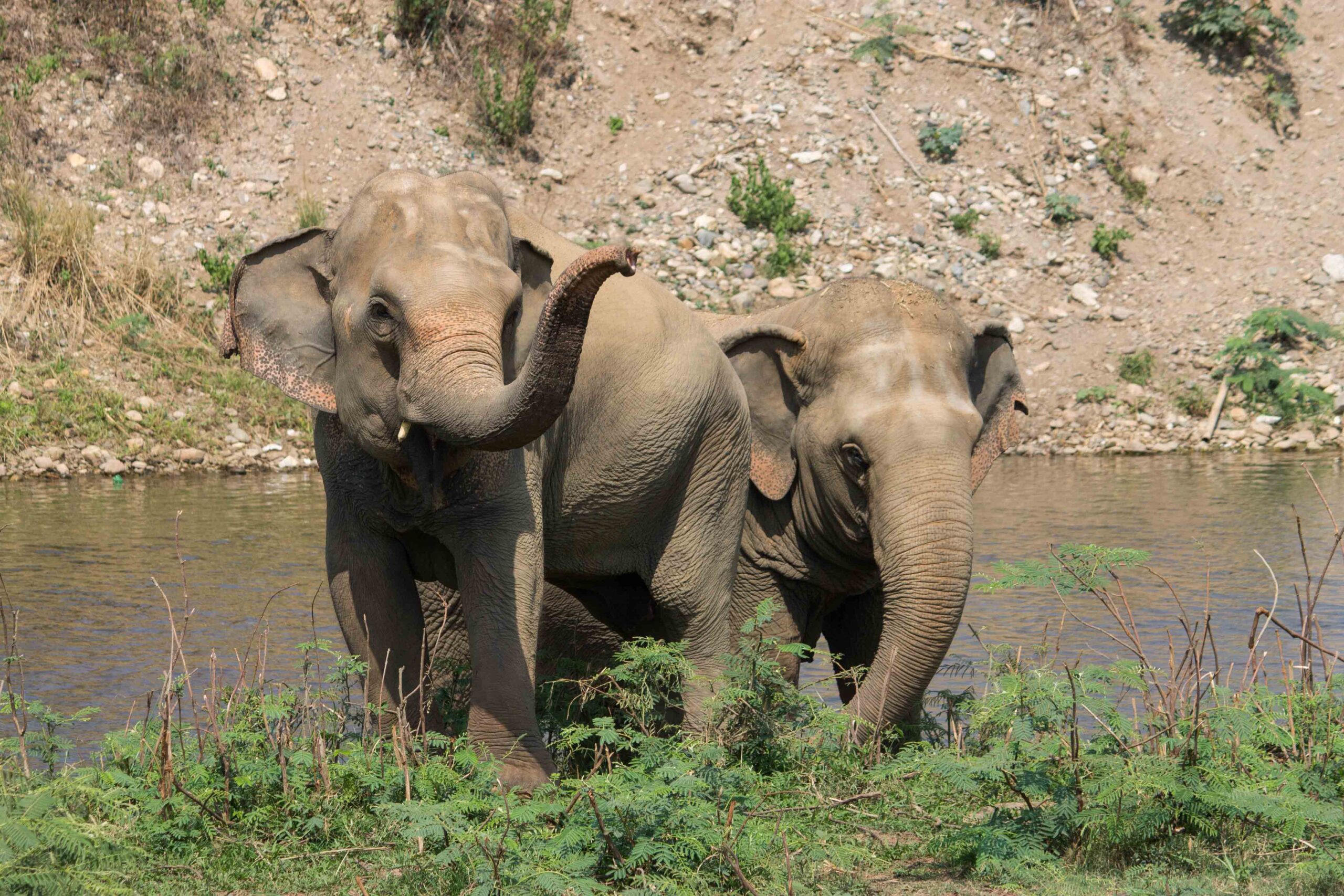
The two elephants pictured below, Mae Lanna and Medo, are best friends and extremely protective of each other. Medo has severe injuries to her hip from logging, while Mae Lanna is partially blind. I like to think that Medo is Mae Lanna’s eyes while Mae Lanna walks at a slower pace to accommodate her disabled friend. Their open affection for each other (demonstrated by the fact that they’re often seen standing close together and touching each other with their trunks) was a beautiful thing to witness.
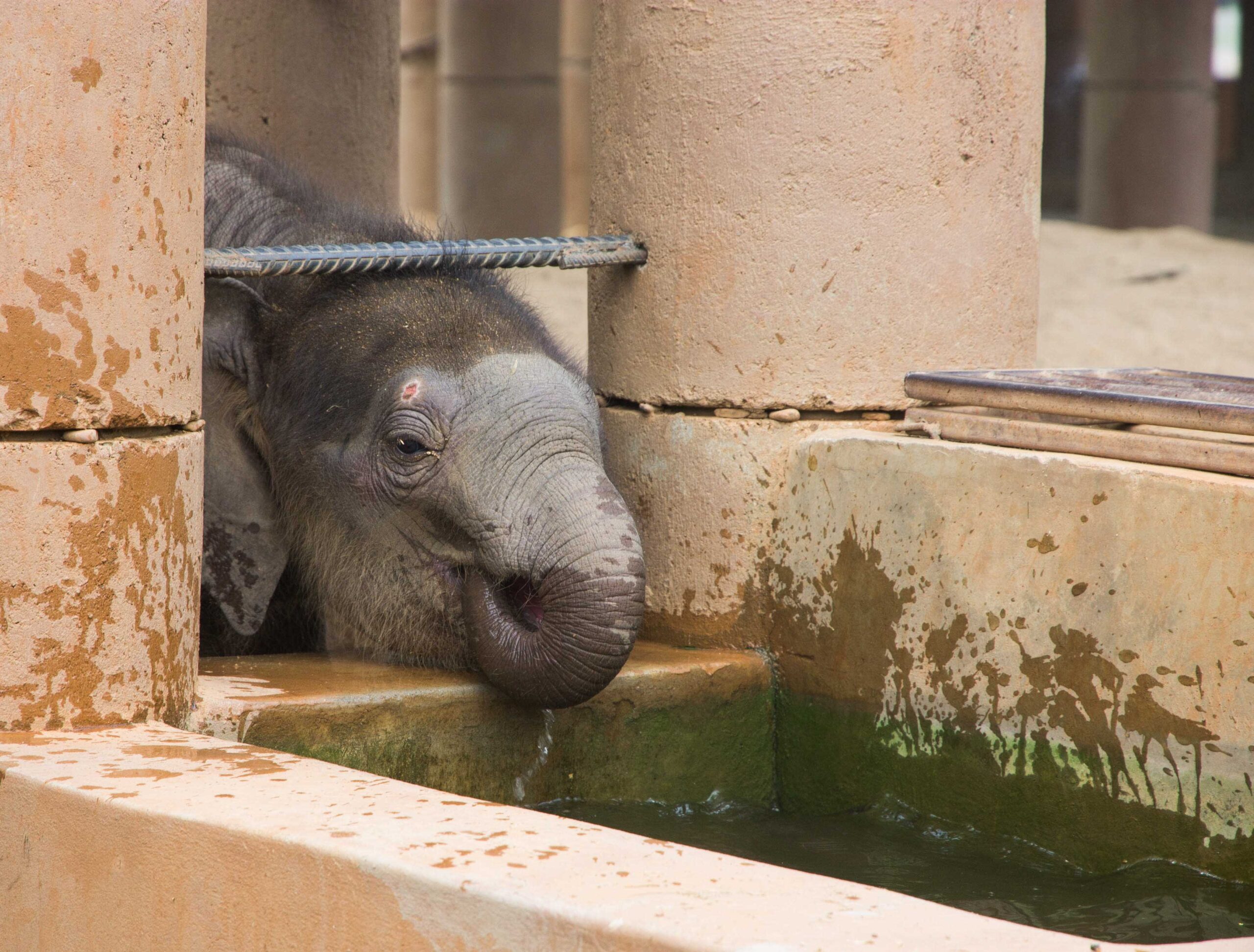
After a delicious vegetarian buffet lunch, we took another walk through the park and visited the newest arrival, baby Dok Rak, who was only two weeks old at the time. Because he’s so young, he’s kept in an enclosure with his protective mom and auntie, who stand guard over him pretty much 24/7. He was snoozing when we first walked over but was soon up on his feet, learning how to use his trunk, nursing from his mom and splashing around in his water trough.
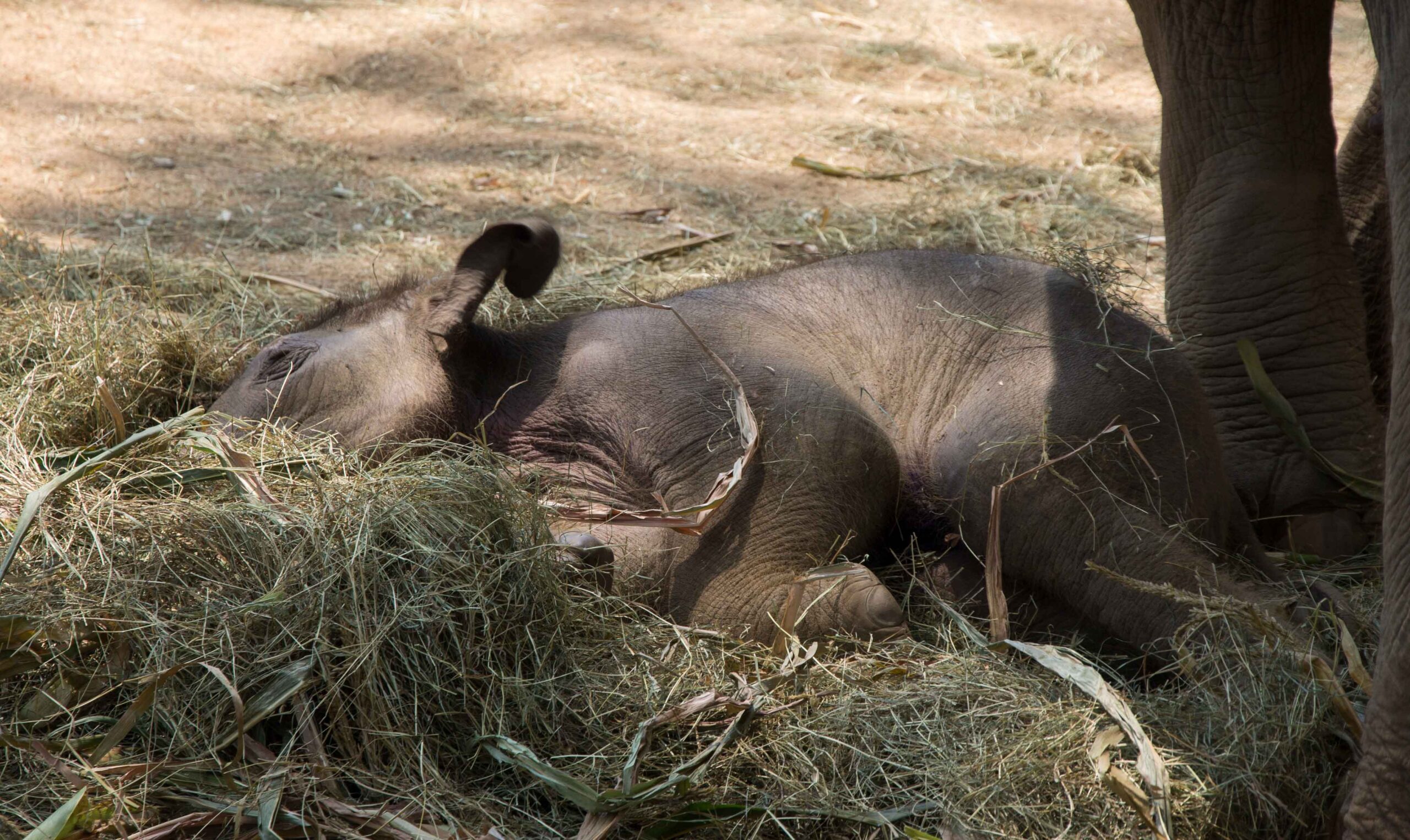
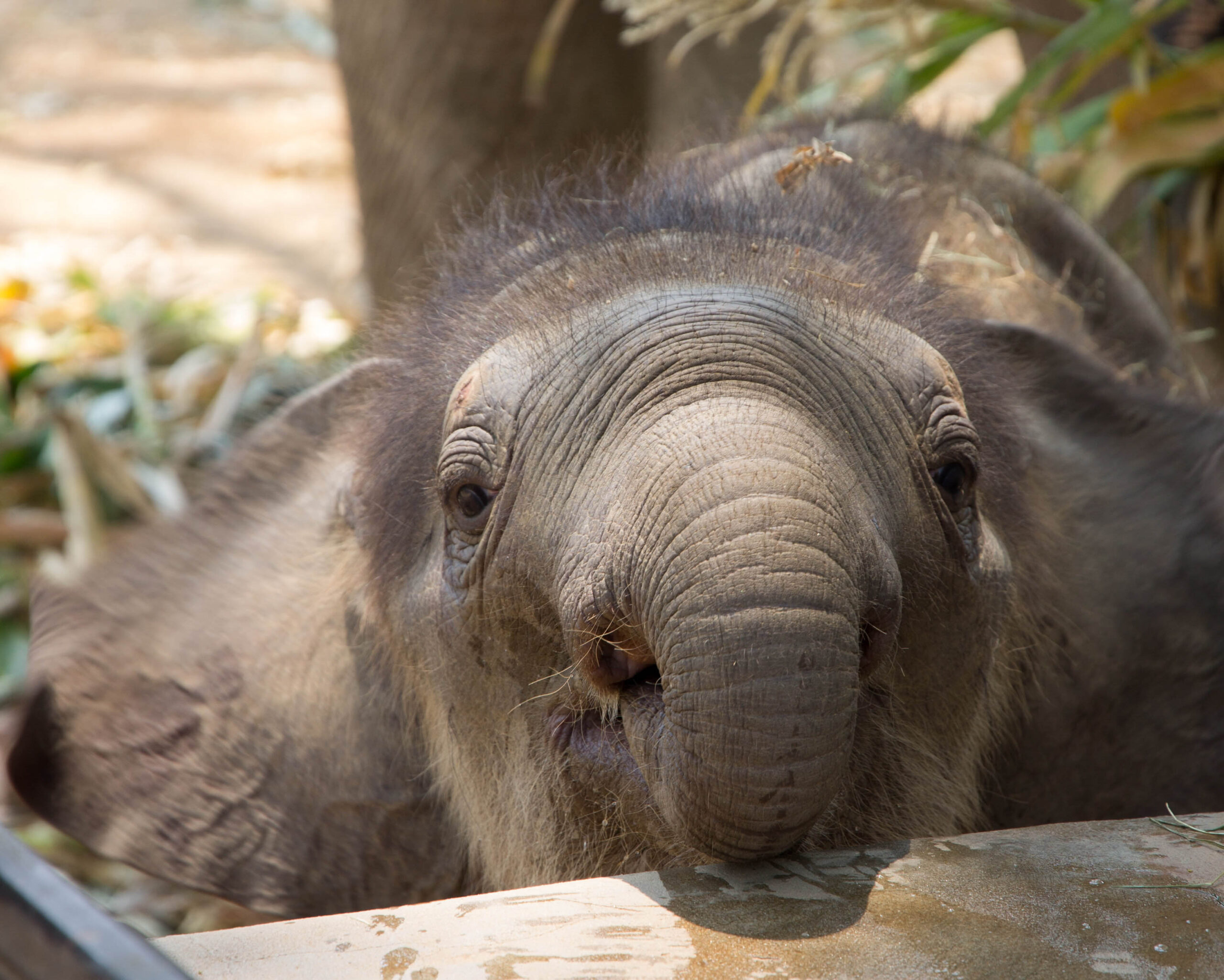
At one point Dok Rak escaped from his enclosure, an adventure I captured on video. This is apparently something he does quite regularly, since his skinny little body can squeeze right through the grate. Although mahouts quickly appeared to usher him back inside, you could tell his mom and auntie were agitated by his escapades and were very relieved to have him back under their care.
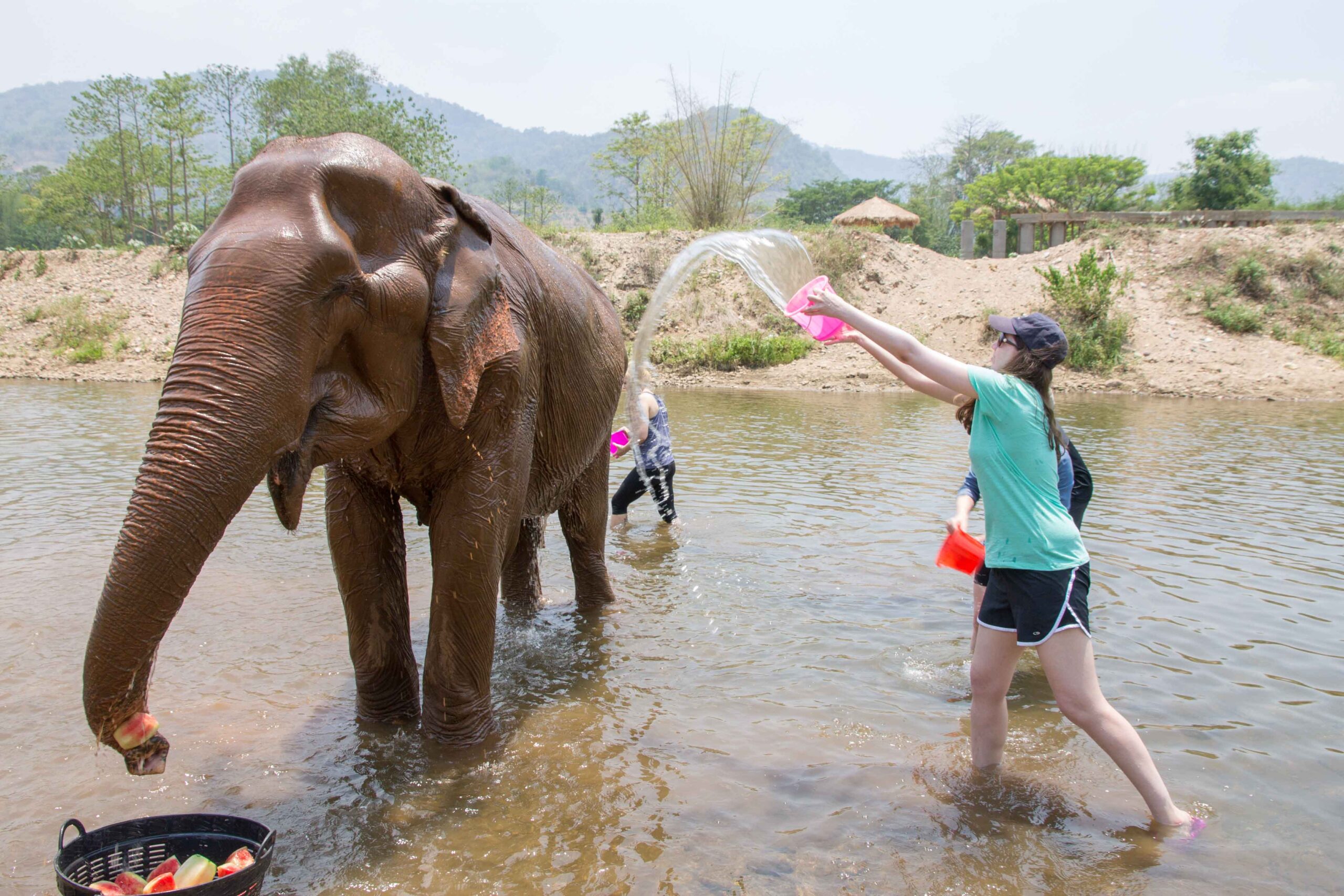
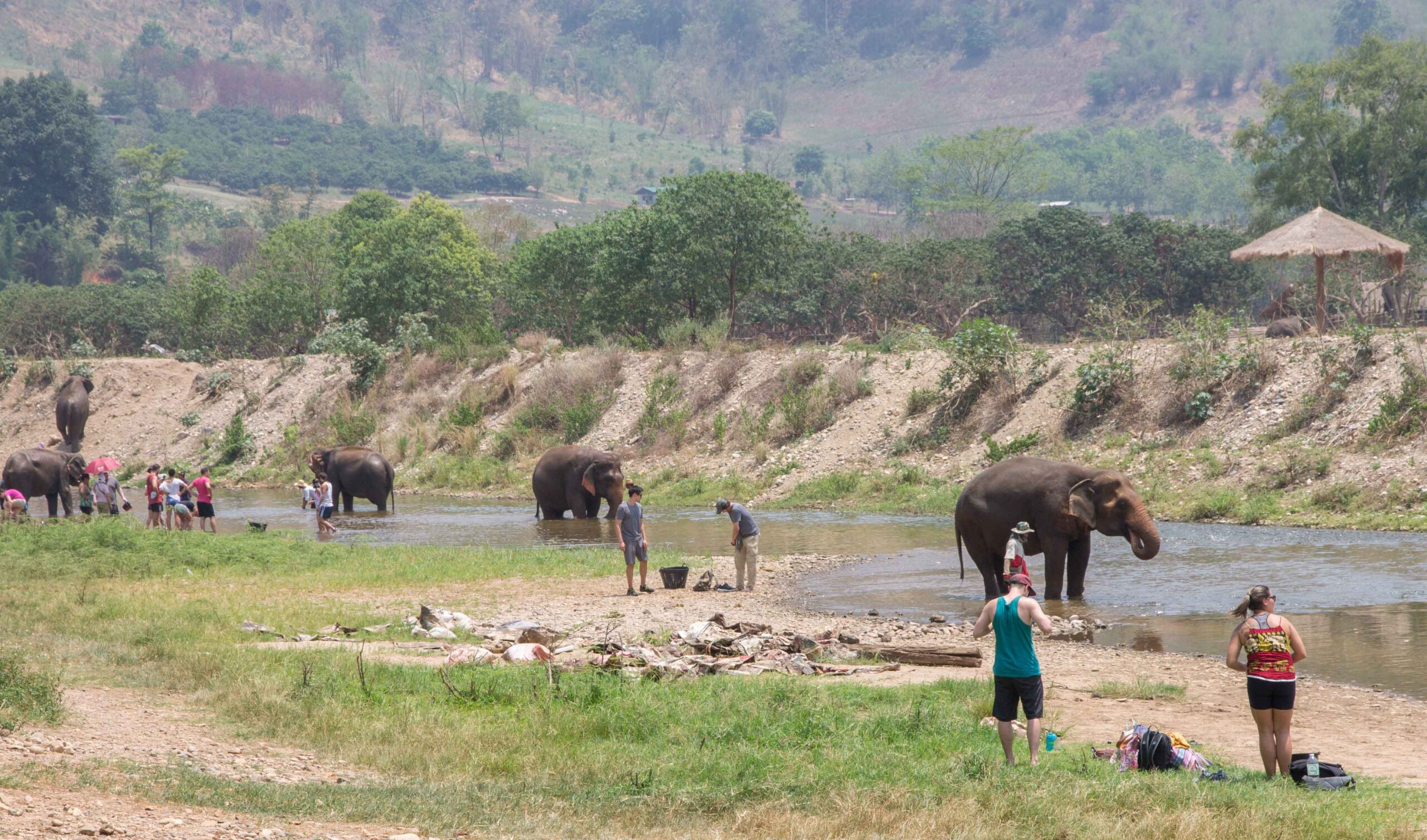
Then it was bath time, one of the biggest attractions of the day tour. Many of the park’s elephants make their way over to the river, and each group is assigned an elephant to throw buckets of water on. We bathed Champagne, the first elephant we had met. The elephants really seem to enjoy this activity, perhaps because they’re rewarded with a huge basket of watermelon. I have to admit that by this point in the day it was absolutely scorching, and the chance to play in the water was a welcome relief for the humans too. 2023 update: Elephant Nature Park no longer has visitors bathe elephants. You can still watch them bathing in the river.
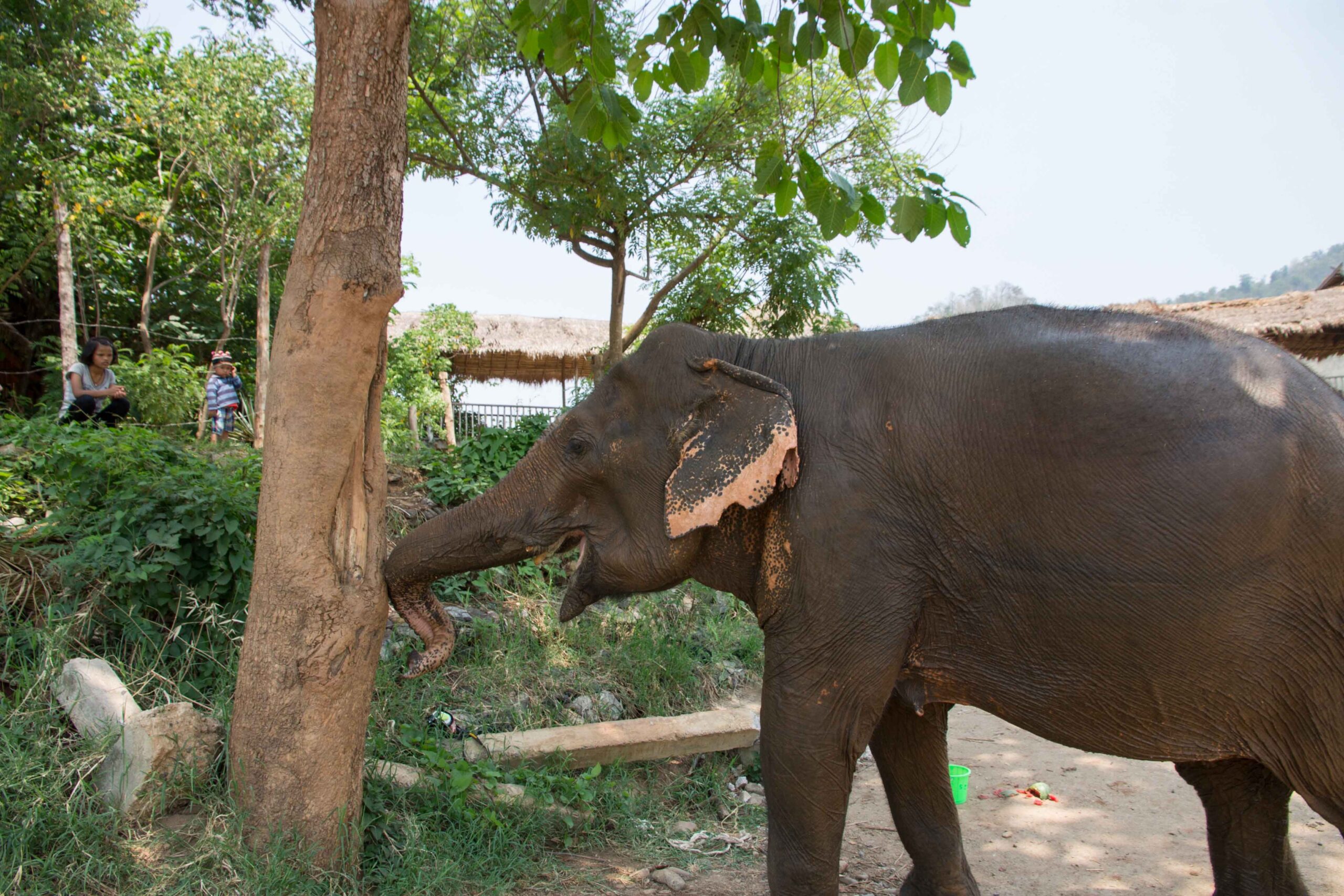
After bath time, Champagne spent a good 15 minutes using this tree as a make-shift scratching post.
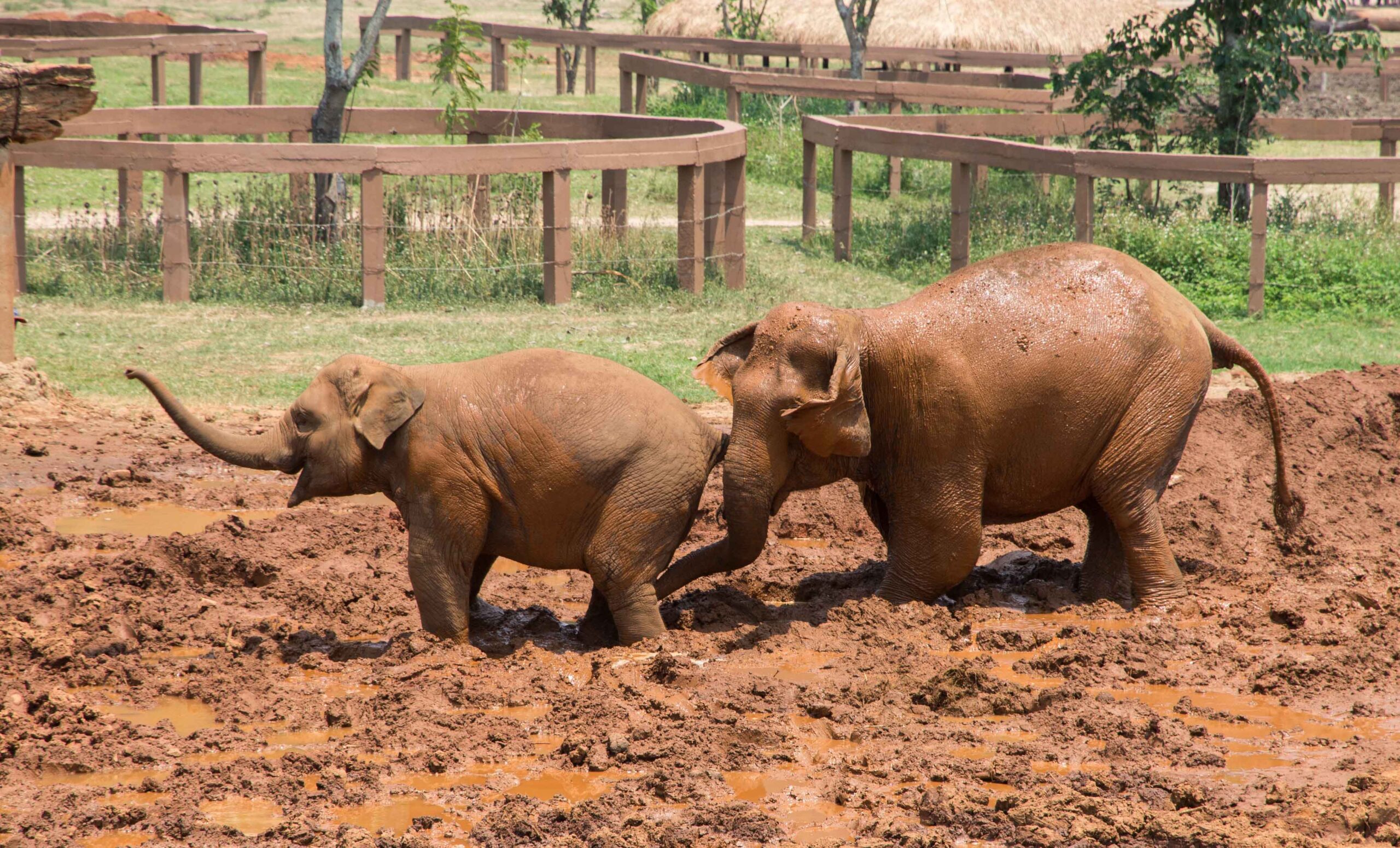
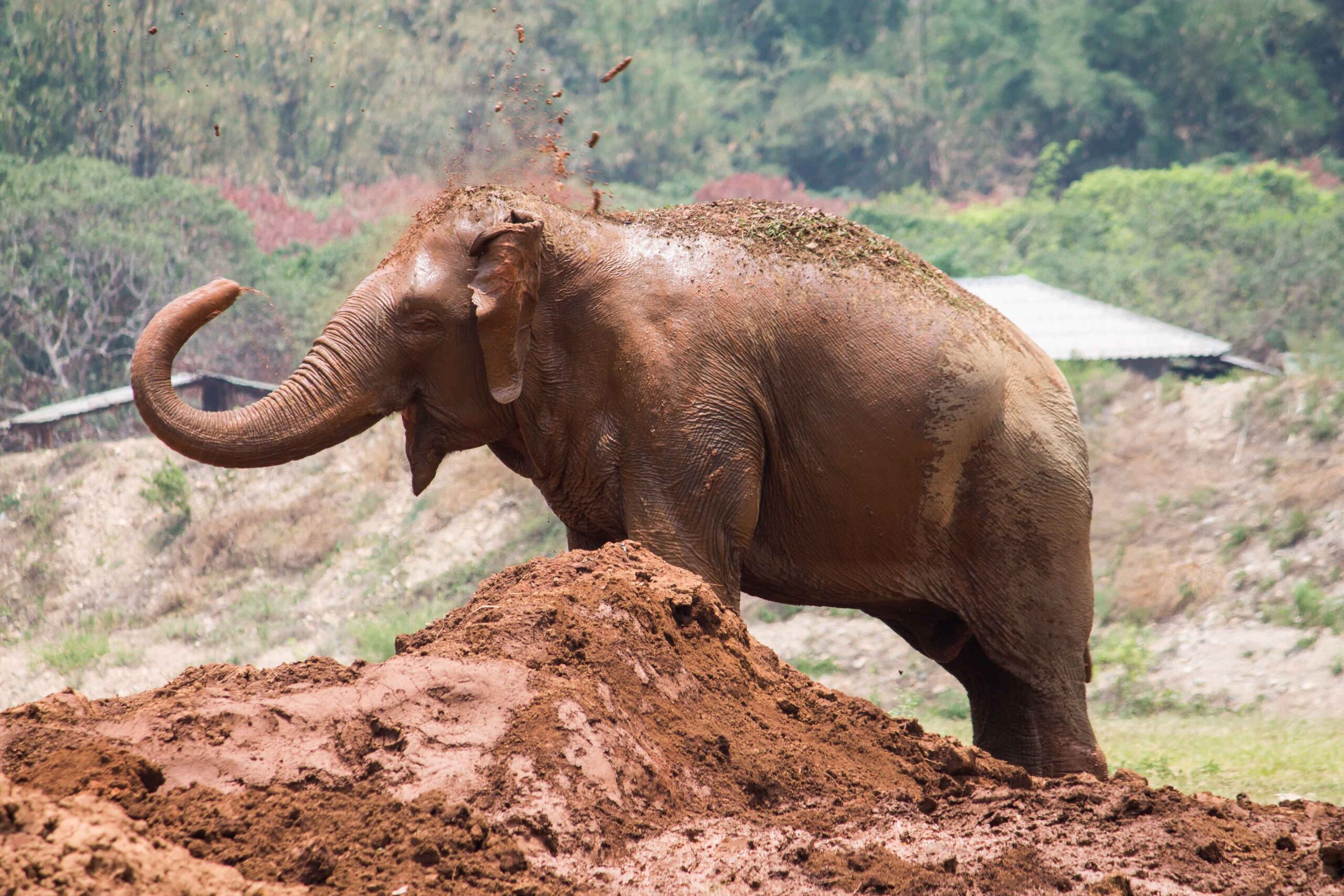
We then watched Dok Mai, the park’s three-year-old female, and her family while they enjoyed some treats and a roll in the mud pit. Although elephants (especially young ones) love playing in the mud, it’s not something they do just for fun. Mud serves as a natural sunscreen and protection from insect bites.

The Overnight Experience at Elephant Nature Park
Around 3 pm, the day trippers left, and the handful of us that were staying overnight were shown to our cabins. If all you have time for is a day tour, I still very much recommend a visit to Elephant Nature Park. As you can see from the photos above, we had an incredible day meeting, feeding and bathing elephants, and you can take comfort in knowing that you’re visiting elephants in the most ethical way possible.
But if there’s any way you can swing an overnight visit here, you must. The day visitors are only in the park for about five hours and the place takes on a dramatically different feel when they leave. Suddenly, elephants far outnumber humans, instead of the other way around. It feels so peaceful and you get the sense you are really observing elephants in their natural setting rather than in a more zoo-like environment.
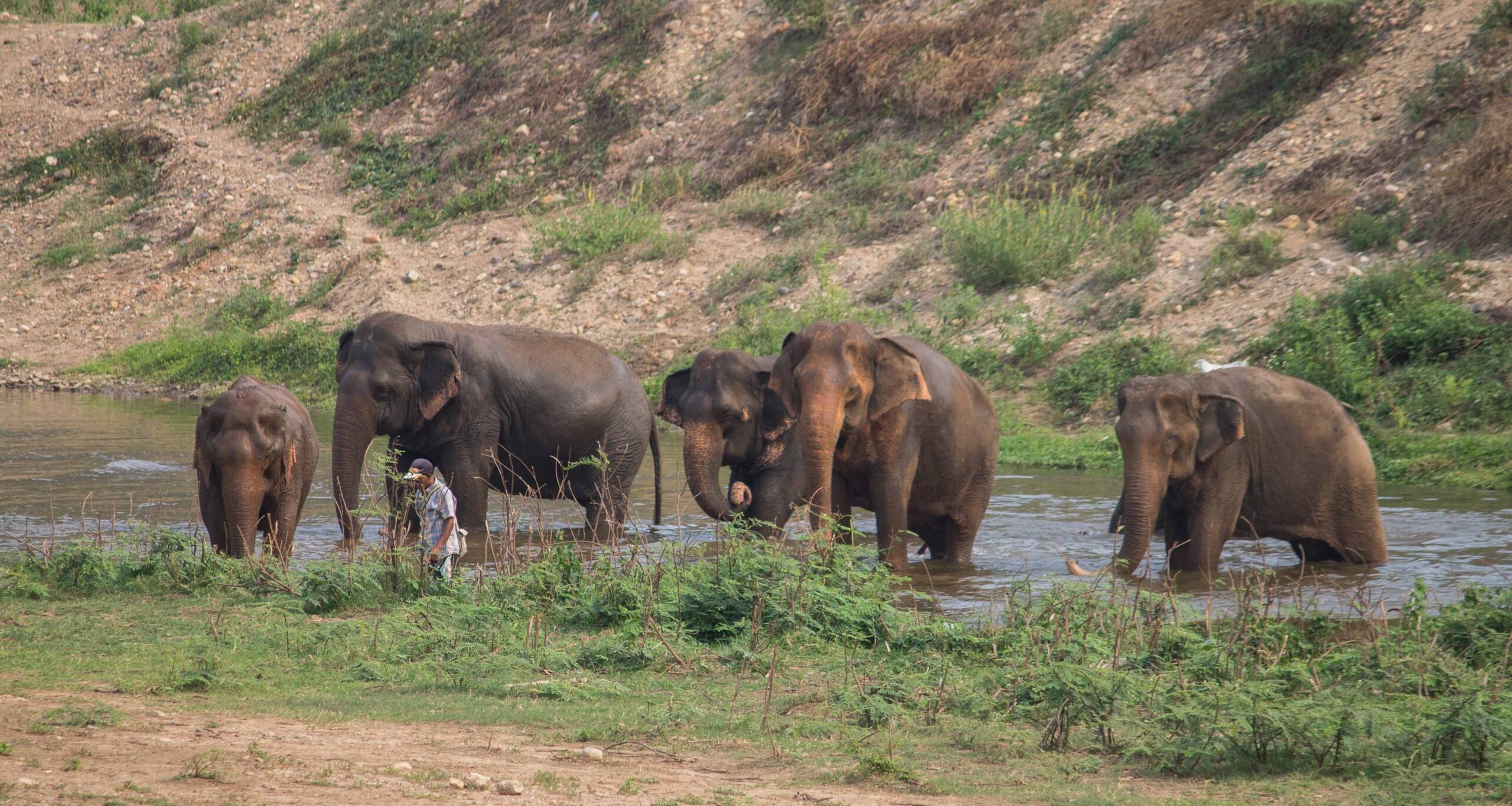

Guests can’t walk around the park grounds without a guide, but you have free-range of several raised viewing platforms that overlook the elephant areas, and I camped out there until sunset and watched the elephants doing their thing.
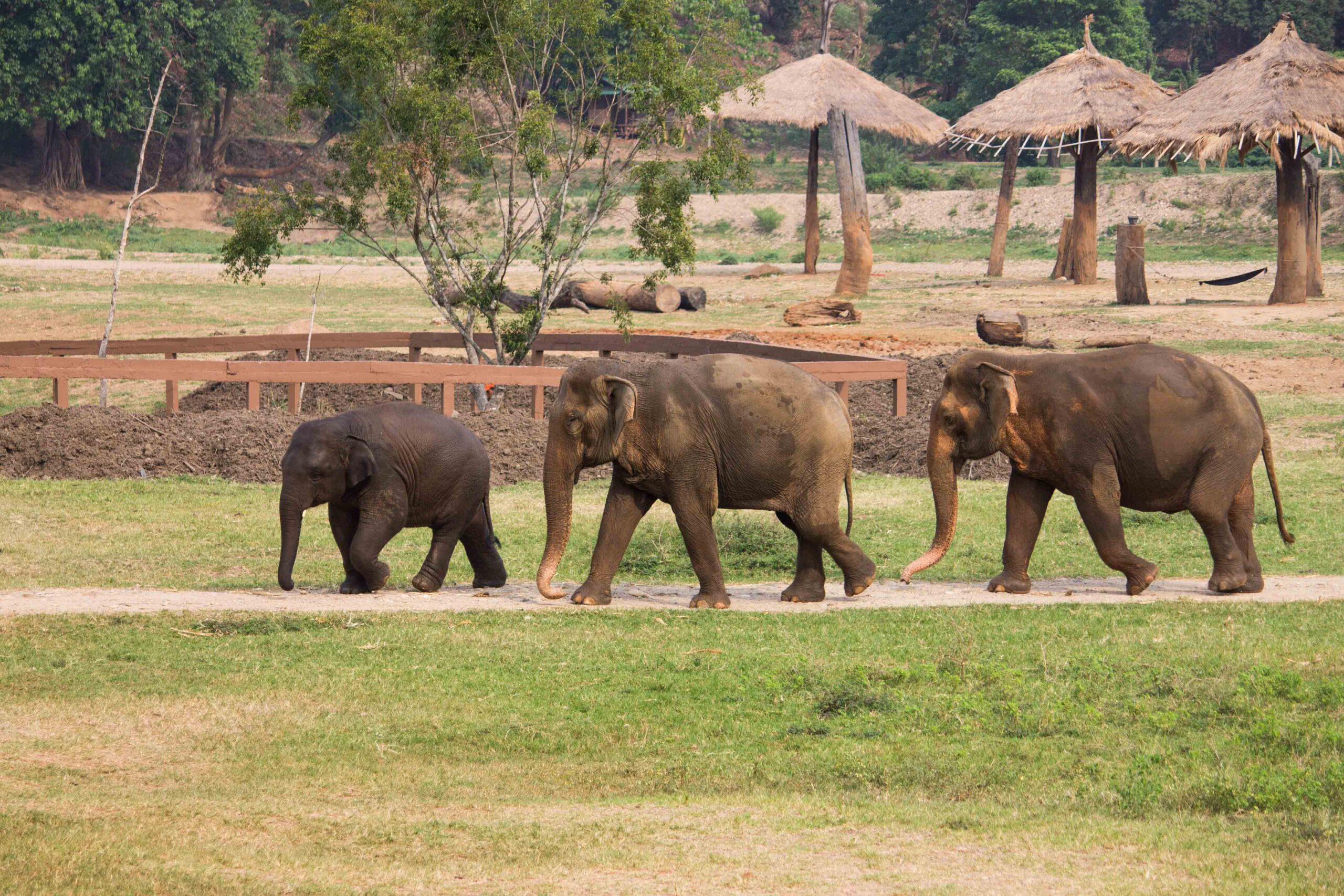
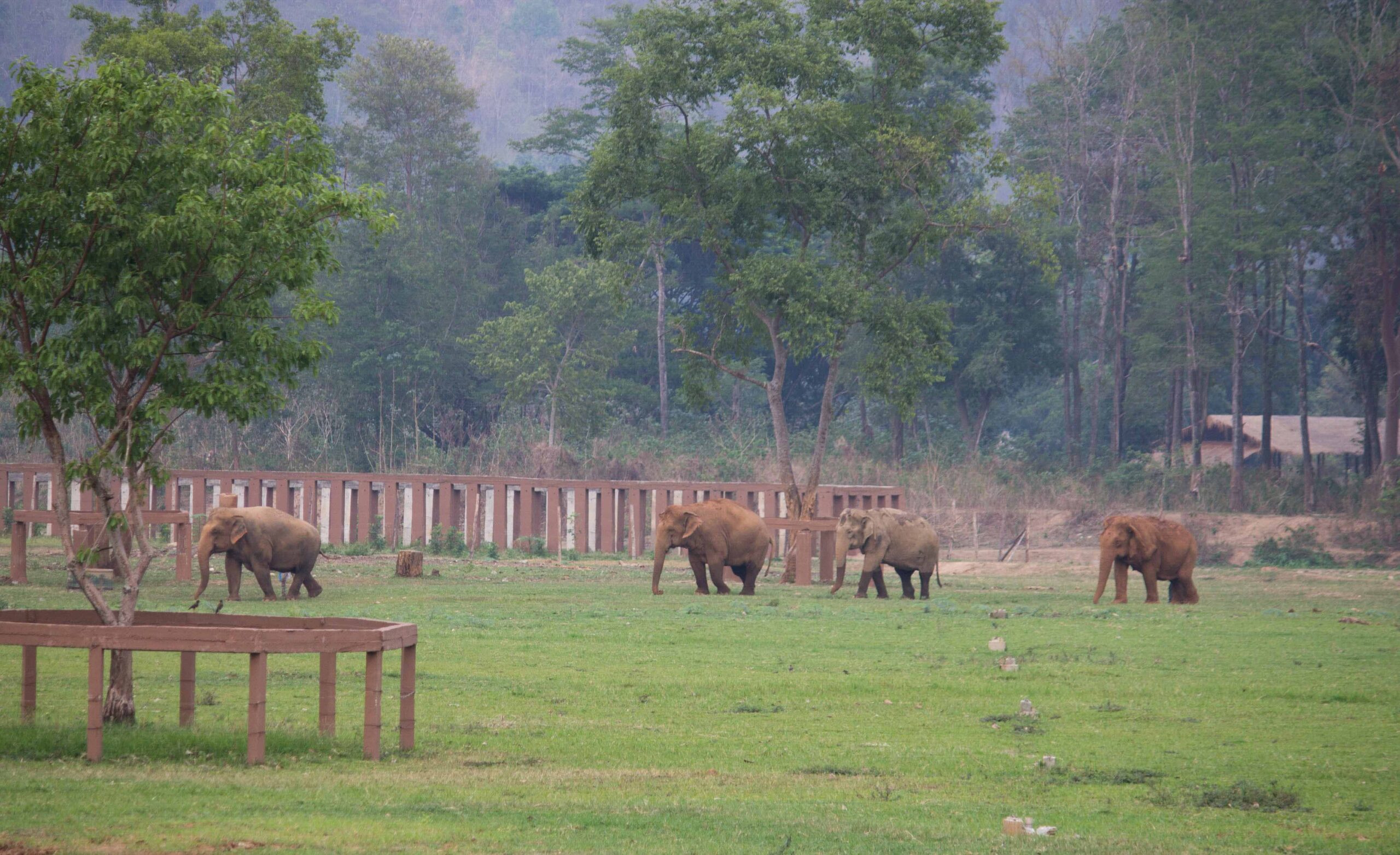
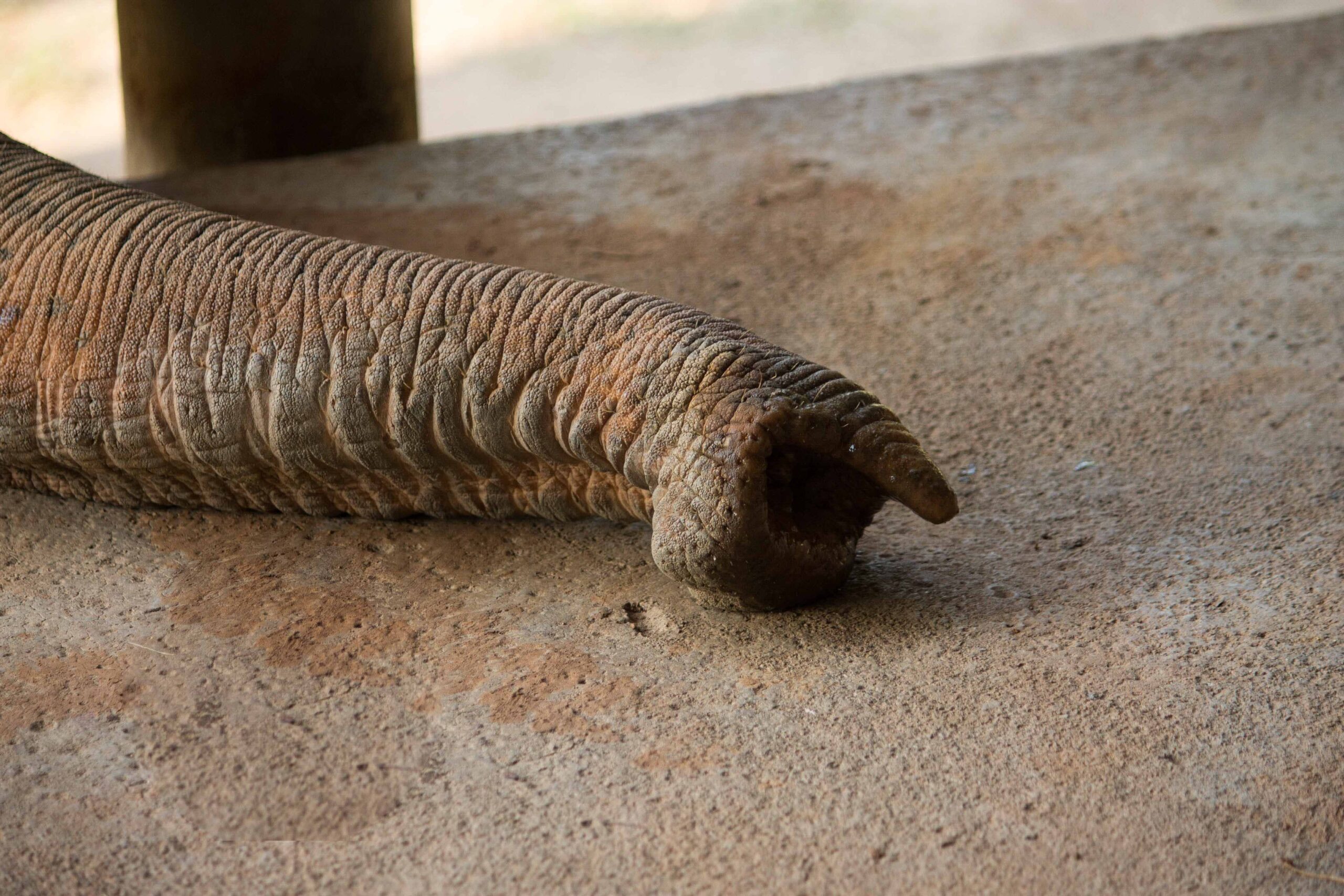
The elephants know they regularly get fed from the platforms, so they’re not shy about about approaching and probing around with their trunks for food. Elephants’ trunks may look clunky, but they’re actually amazingly dexterous and can pick up a single grain of rice!
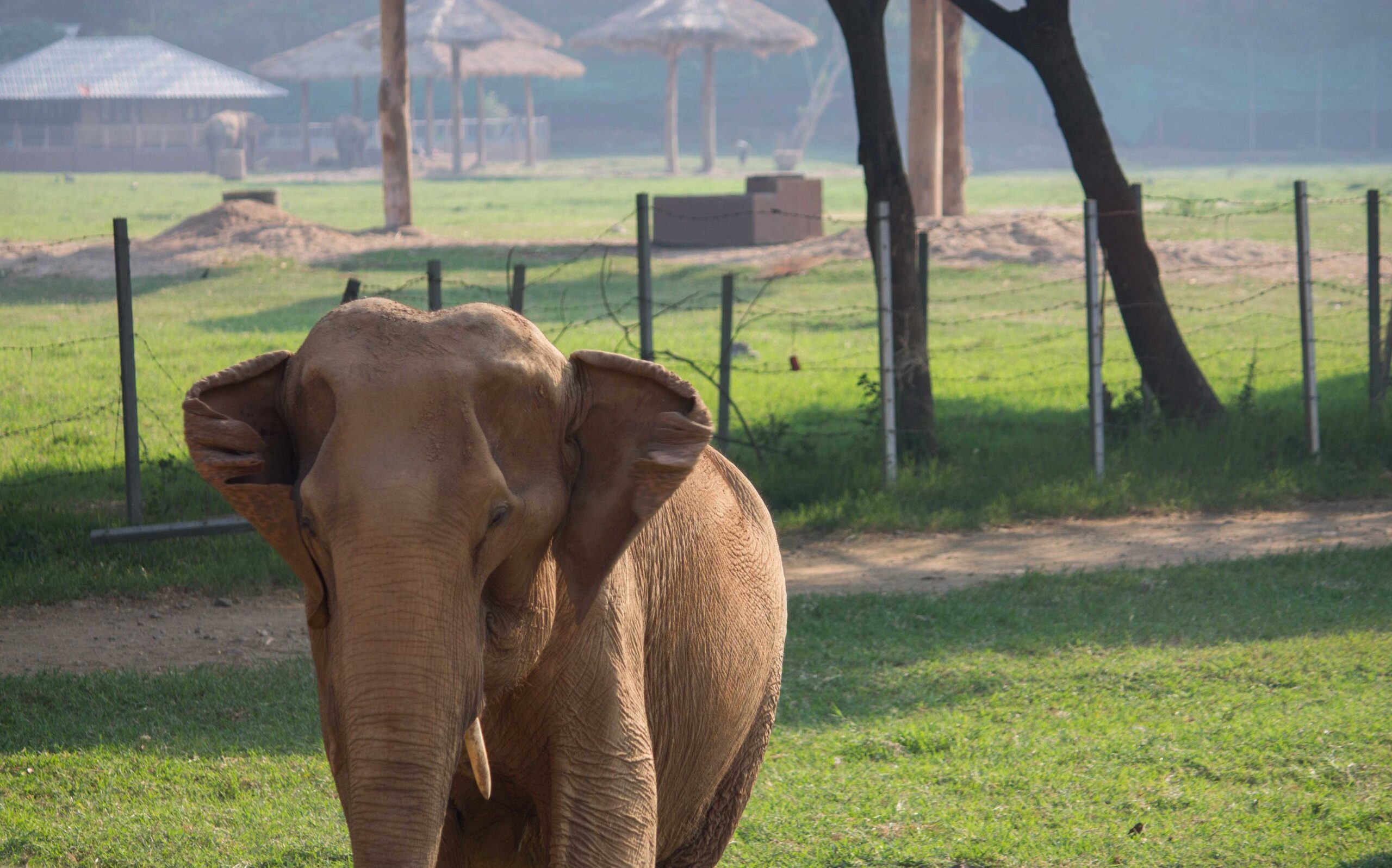
I really enjoyed the peace and quiet and the chance to observe elephants without the crowds again the next morning. Looking up from my breakfast to see elephants strolling by less than 20 feet away was an incredible thrill.
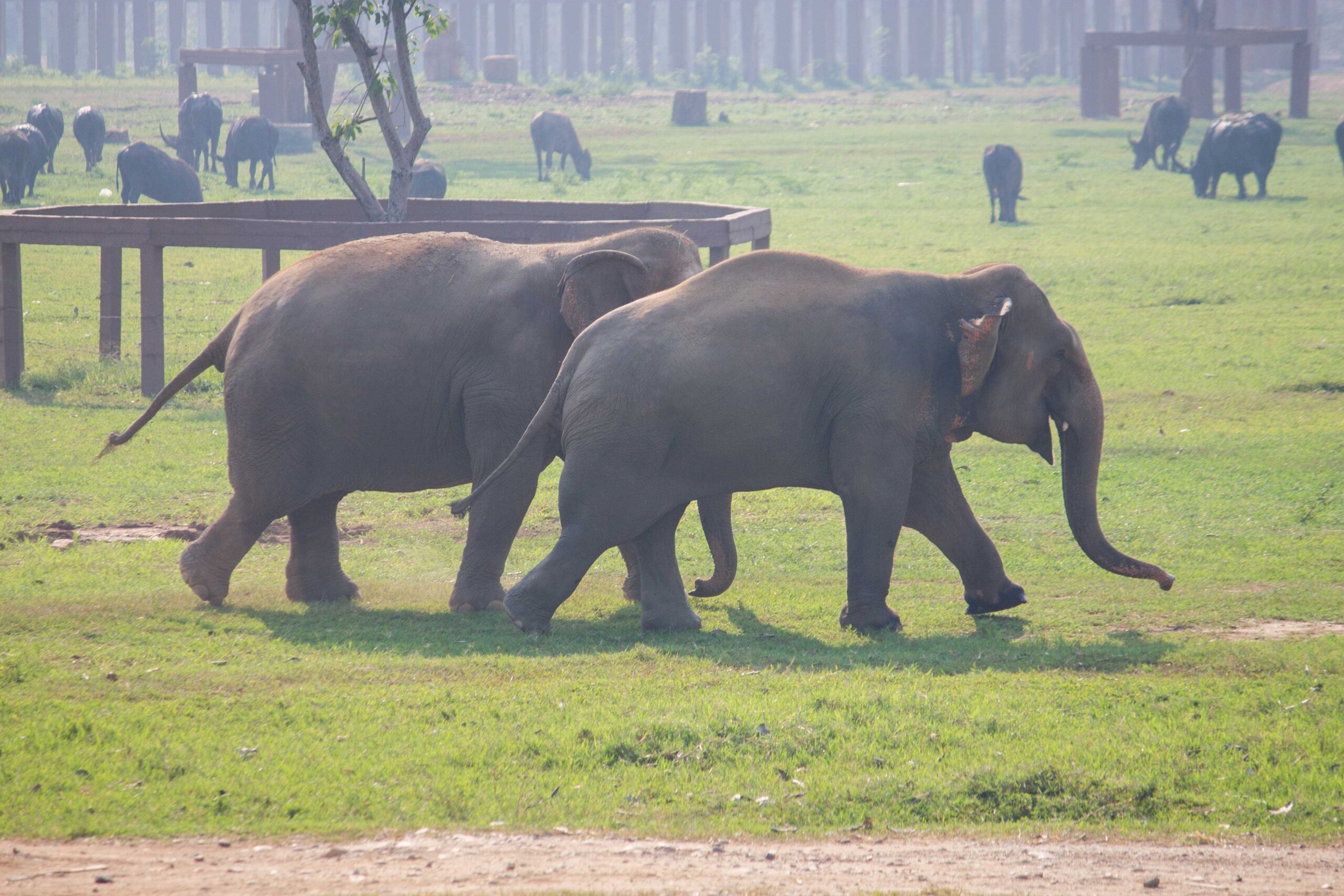
Although I expected the second day’s itinerary to be quite similar to the first, they were actually pretty different. Day two was much more self-directed, and our guide took input from the group about what elephants we wanted to see. Although some activities such as bathing were repeated, we also did things we hadn’t done the previous day, including making banana rice balls for the older elephants like Mae Thai (the 70-year-old grand dame of the park) who aren’t able to chew well, which was a total blast.

We began our day by taking advantage of the comparatively cool temperatures to take a long walk to the far edge of the park, where some of the larger family groups hang out.
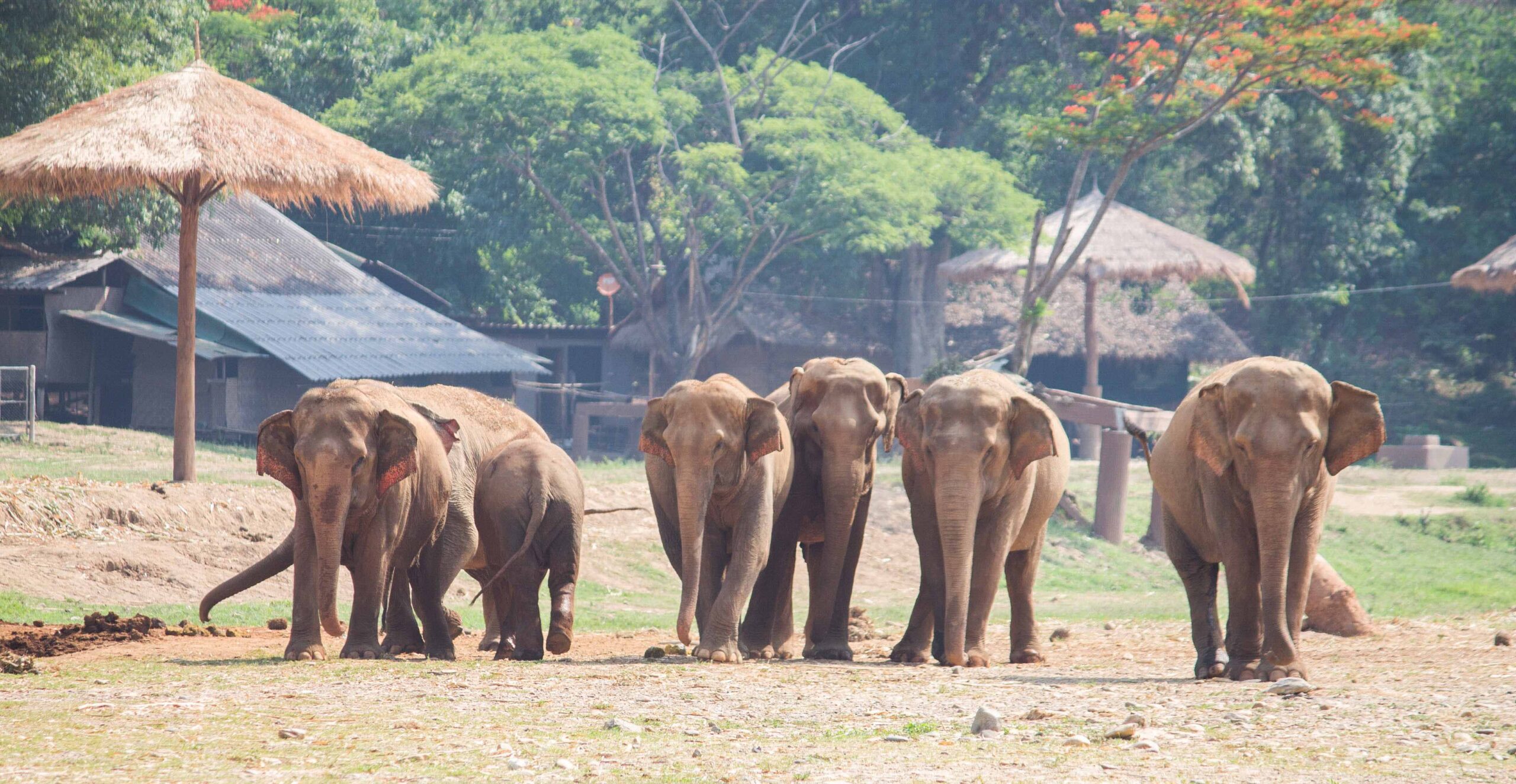
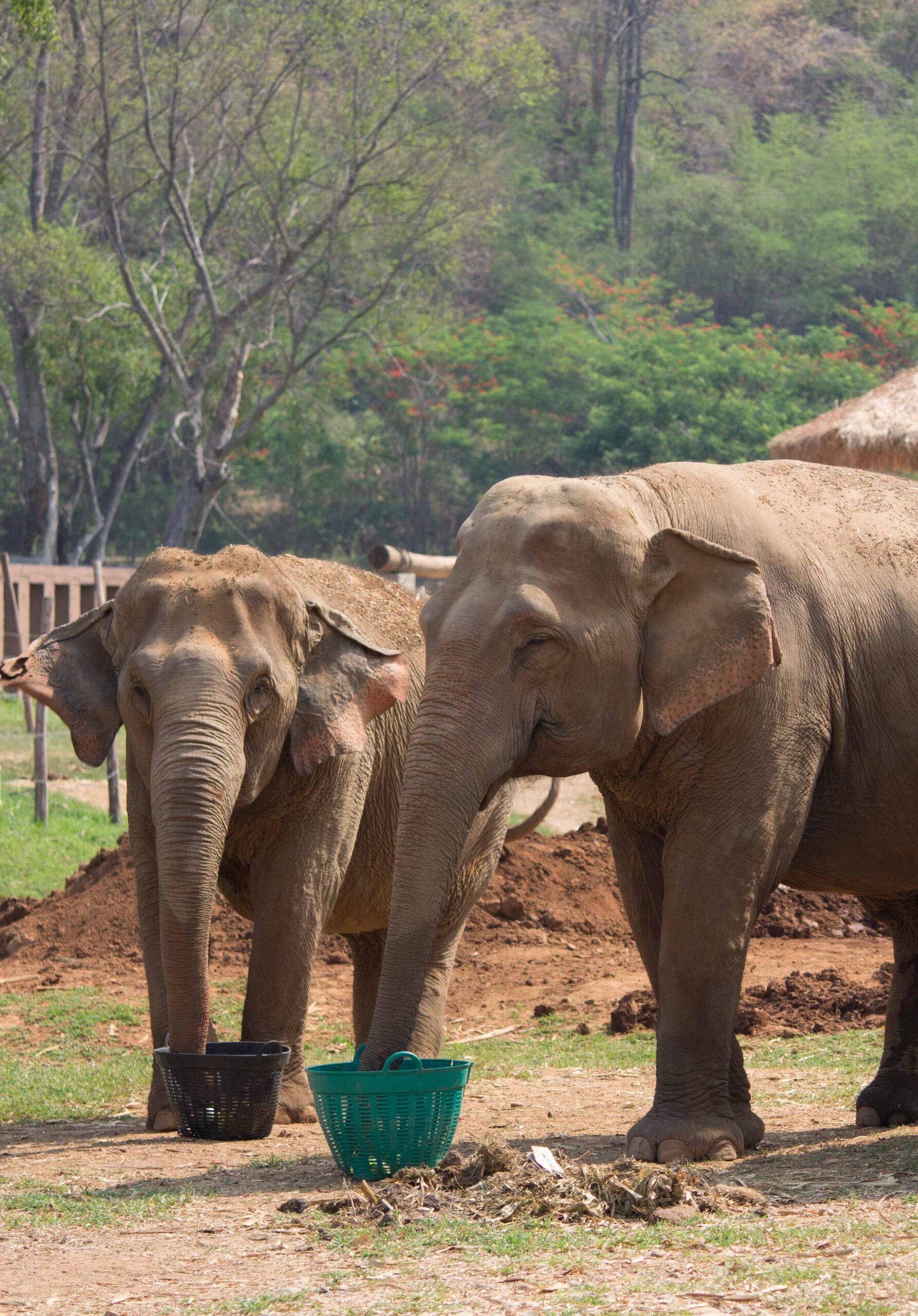
We spotted Yindee, a two-year old baby, playing with his family near the river.
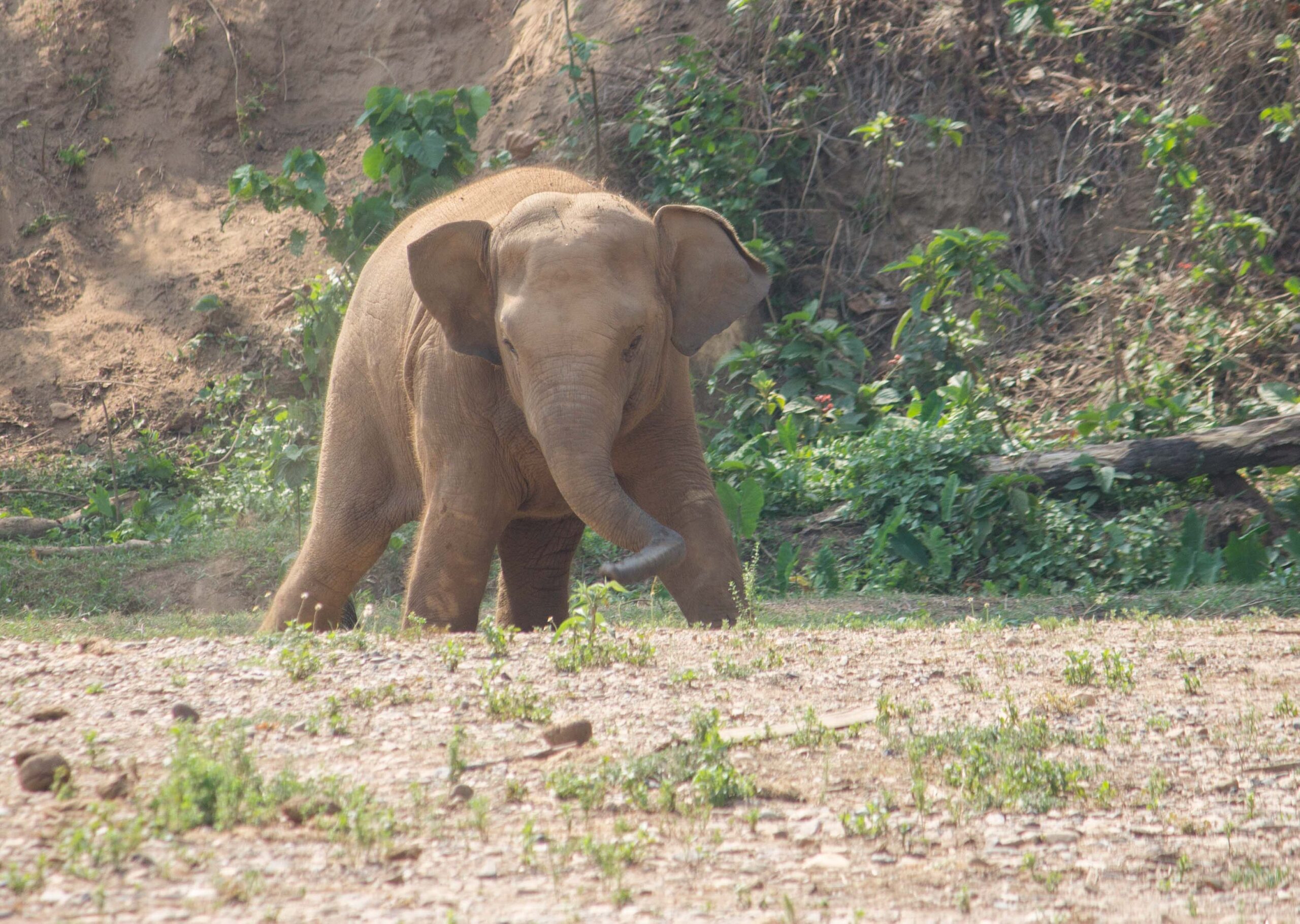
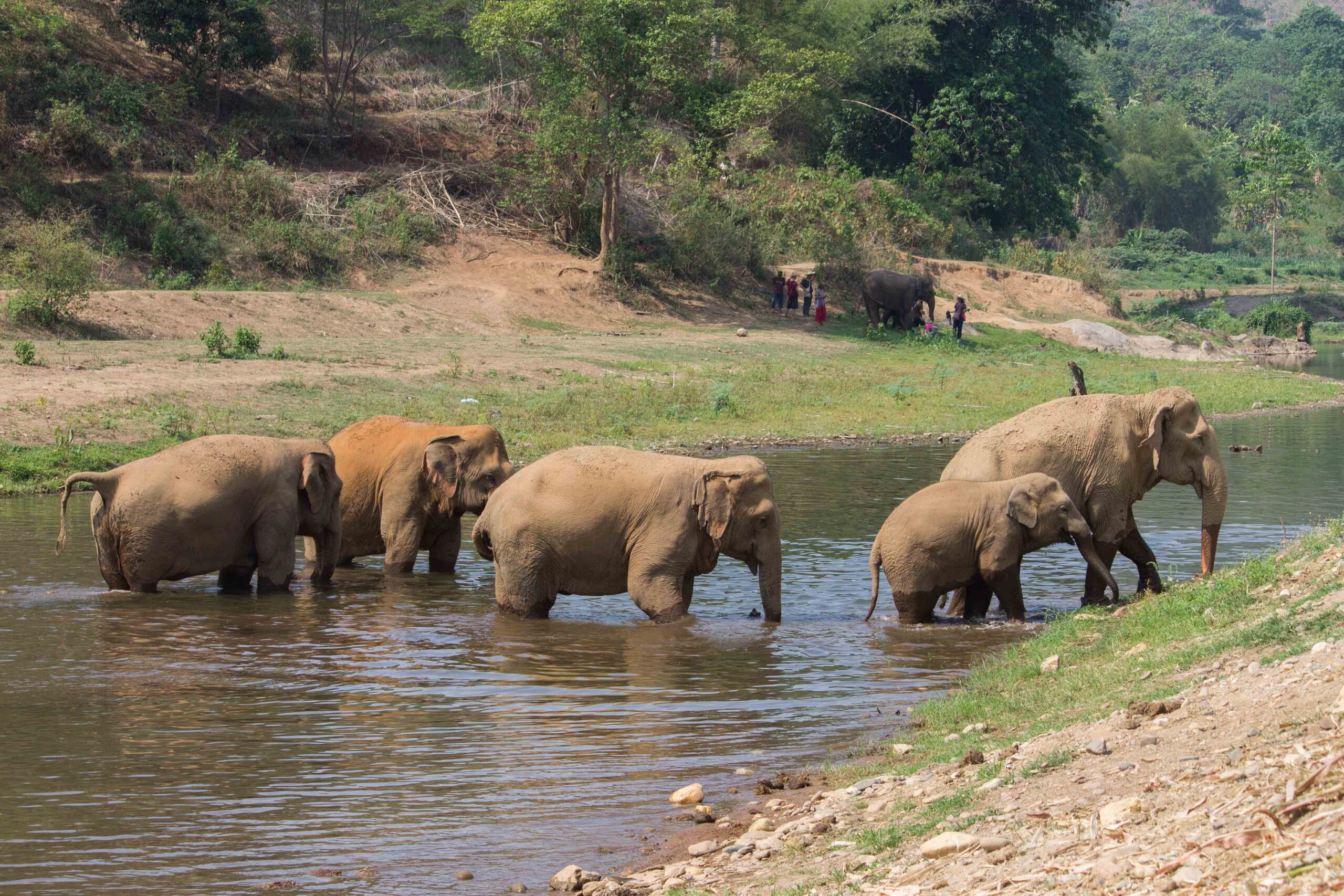
Our group voted to make return visits to the newborn Dok Rak and sweet Kabu.
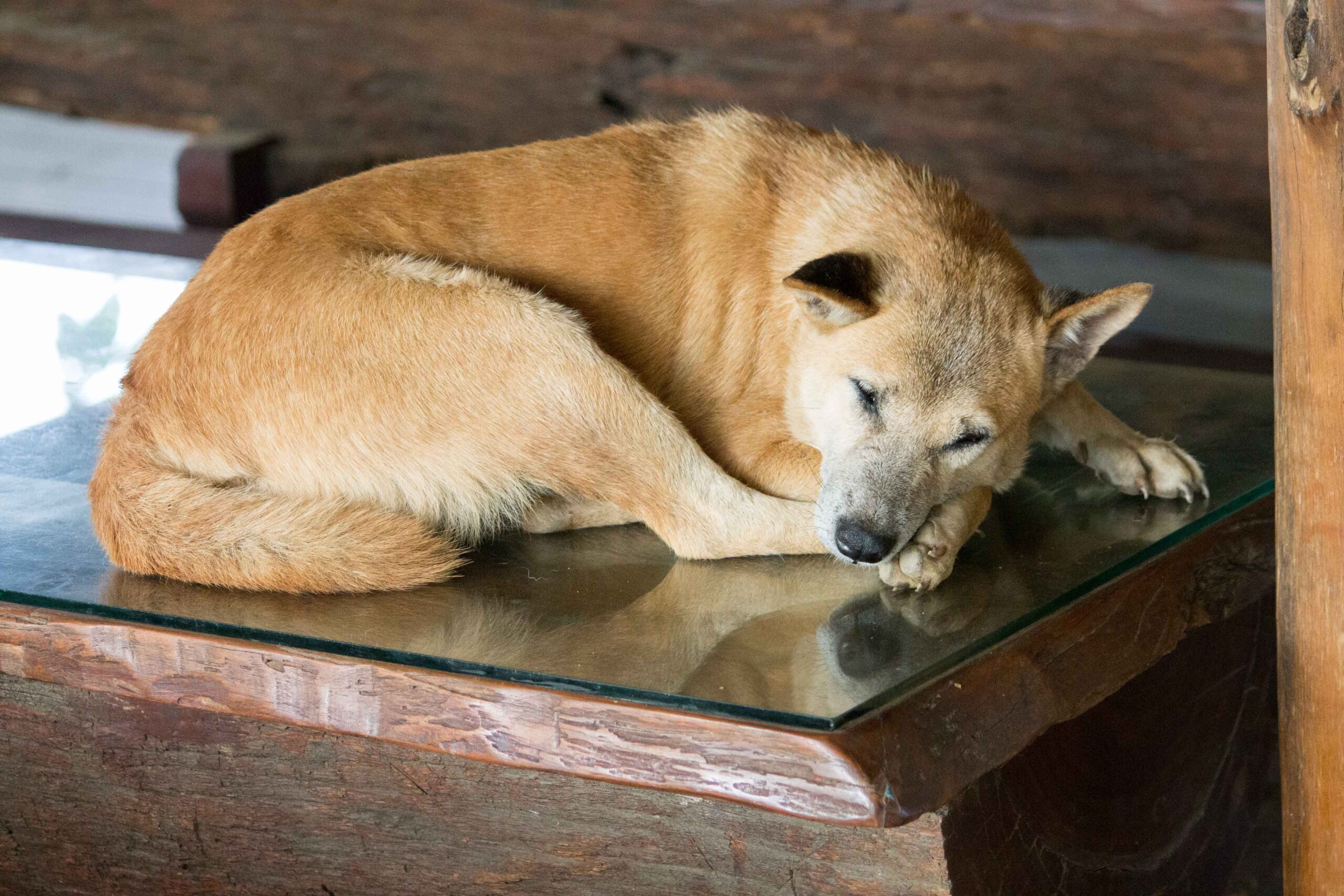
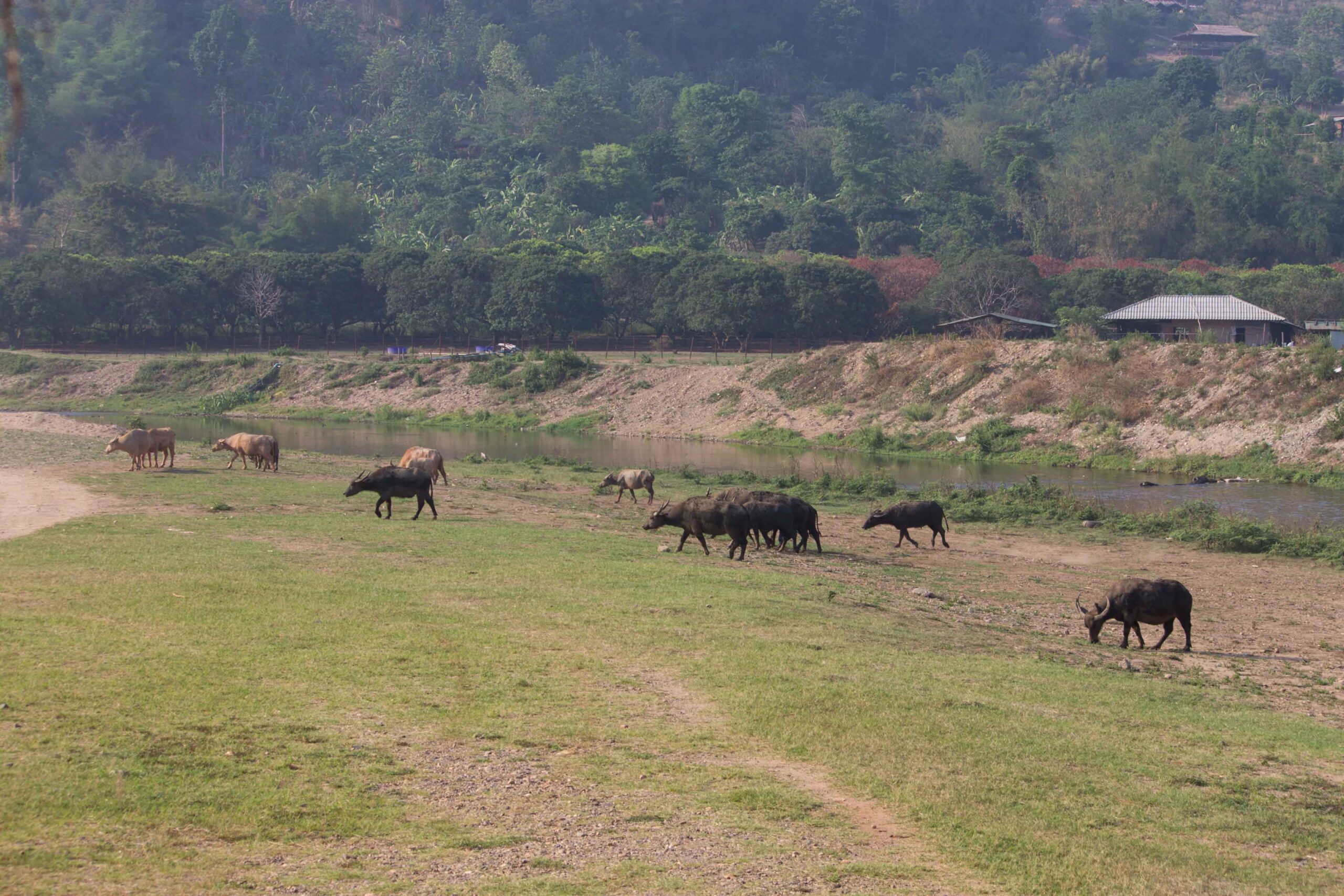
Elephant Nature Park isn’t just a sanctuary for elephants. It’s also home to many other animals, including more than 400 dogs (most of whom were pet dogs that were abandoned or lost during the great Thailand floods of 2011) and lots of water buffalo. The dogs have all been vaccinated against rabies, so it’s safe to play with them, and if you’re staying overnight, you might have one as a guest in your room like we did! Most of the dogs at ENP are up for adoption, so if you fall in love with one, you might be able to bring him home with you.
Overnight guests even have the option of taking some of the dogs on a walk on the afternoon of the second day, but I’m sure it comes as no surprise to anyone that I opted to stick around the park and watch some more elephant mud baths instead. I love how clearly you can see the joy on their faces!
It’s fair to say that our time at Elephant Nature Park surpassed even my sky-high expectations. Although I said at the beginning of this post that meeting resilient survivors like Jokia and Kabu was uplifting, it was even more incredible to see the happiness on the faces of babies like Dok Mai, Yindee, Dok Rak and Navann, who were all born free at ENP, and to know that they will never be yanked away from their mothers prematurely, tortured, stabbed with bullhooks or forced to carry tourists on their backs all day long.
Thanks to the hard work of Elephant Nature Park’s founder/elephant-whisperer Lek Chailert and ENP’s explosive word-of-mouth and social media popularity, more and more elephant camp owners in Thailand are abandoning the chairs and chains and choosing to give a better life to their elephants. Every person who visits Southeast Asia and insists upon having an ethical encounter with elephants is taking one small step towards making elephant trekking camps and the abuse they entail a thing of the past.
Even if a trip to Thailand isn’t in your immediate future, you can contribute to the wonderful conservation work ENP’s charity, Save Elephant Foundation, is doing by purchasing elephant merchandise or sponsoring one of the park’s elephants. I’ve already adopted my beloved Kabu!


We are so delighted in reading your adventures at Elephant Nature Park! Thank you for sharing your experiences with the world. We hope to see you again on you next visit to Thailand! Khop Khun Khrap!
I’m glad you enjoyed the post, Dave! If I ever find myself in Thailand again – and I certainly hope I do some day – a return visit to Elephant Nature Park will definitely be on the itinerary!
an amazing blog and one day. im going to make it there. what an experience. thank you for sharing
Thanks! Glad you enjoyed the post. You will love Elephant Nature Park! It’s such a special place.
Thank you for a wonderful chance to see this amazing place again. I too visited ENP 5 years ago and have sponsored an elephant here ever since. Sadly I lost all my photos of my visit when my computer crashed, so it was lovely to revisit through your photos.
Oh, I’m so sorry you lost your photos, Karen! I’ve been there and I know how disappointing it is. I’m touched by your comment and I’m so glad I could help you relive your visit to ENP!
[…] country and the desire to spend some time in Bangkok and visit islands on both coasts, as well as stay overnight at Elephant Nature Park, something had to give in our itinerary and unfortunately it was Chiang Mai. What I did not […]
LOVE. This is now officially on my Thailand to-do list. I’m so inspired by your trip!
Yesss, DO IT! I look forward to experiencing it again through your lens some day! 🙂
[…] as our base for exploring Chiang Mai. We stayed here for one night both before and after our overnight visit to Elephant Nature Park (they stored our luggage while we were at the park, which was much appreciated). Our first night […]
[…] attractions for any visitor to Thailand. In fact, I’d go so far as to say that, other than playing with elephants, the day we spent here was my favorite part of the entire trip. This gorgeous stretch of sand, […]
[…] animals with my camera is one of my favorite things, so one day last month I queued up my favorite solo road trip music (Miranda […]