Last Updated on March 27, 2026 by Adrienne
I recently spent two days in Seville, Spain and fell head over heels for the city, which has an interesting history, beautiful architecture, great food and friendly locals. While Seville immediately became one of my favorite European cities, it’s also relatively small and compact, and you can see it quite thoroughly in only two days. Read on for my recommendations about how to make the most of two days in Seville, along with recommendations for where to stay and what to eat.
Seville Two Day Itinerary Highlights
Day 1: Royal Alcazar, Plaza de Espana, Parque de Maria Louisa, Santa Cruz neighborhood, tapas dinner
Day 2: Churros and chocolate, Cathedral and Giralda, Torre del Oro and Guadalquivir River, Triana neighborhood, flamenco
If you have only one day in Seville, I would try to hit the Royal Alcazar, the Plaza Espana and the Cathedral/Giralda. These are Seville’s three biggest tourist attractions for a reason. And make sure to find room for churros and chocolate somewhere in there. 🙂
The Royal Alcazar
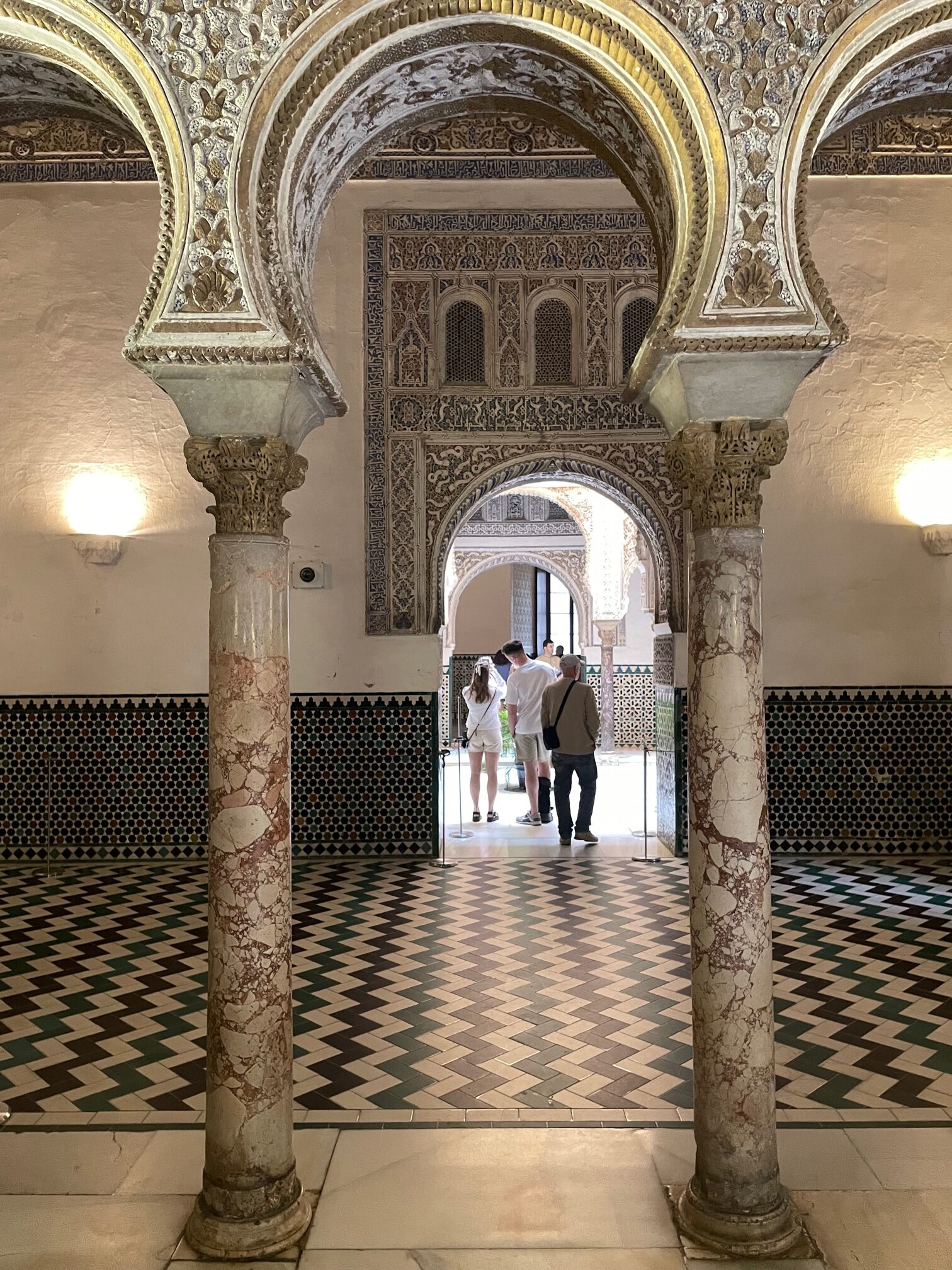
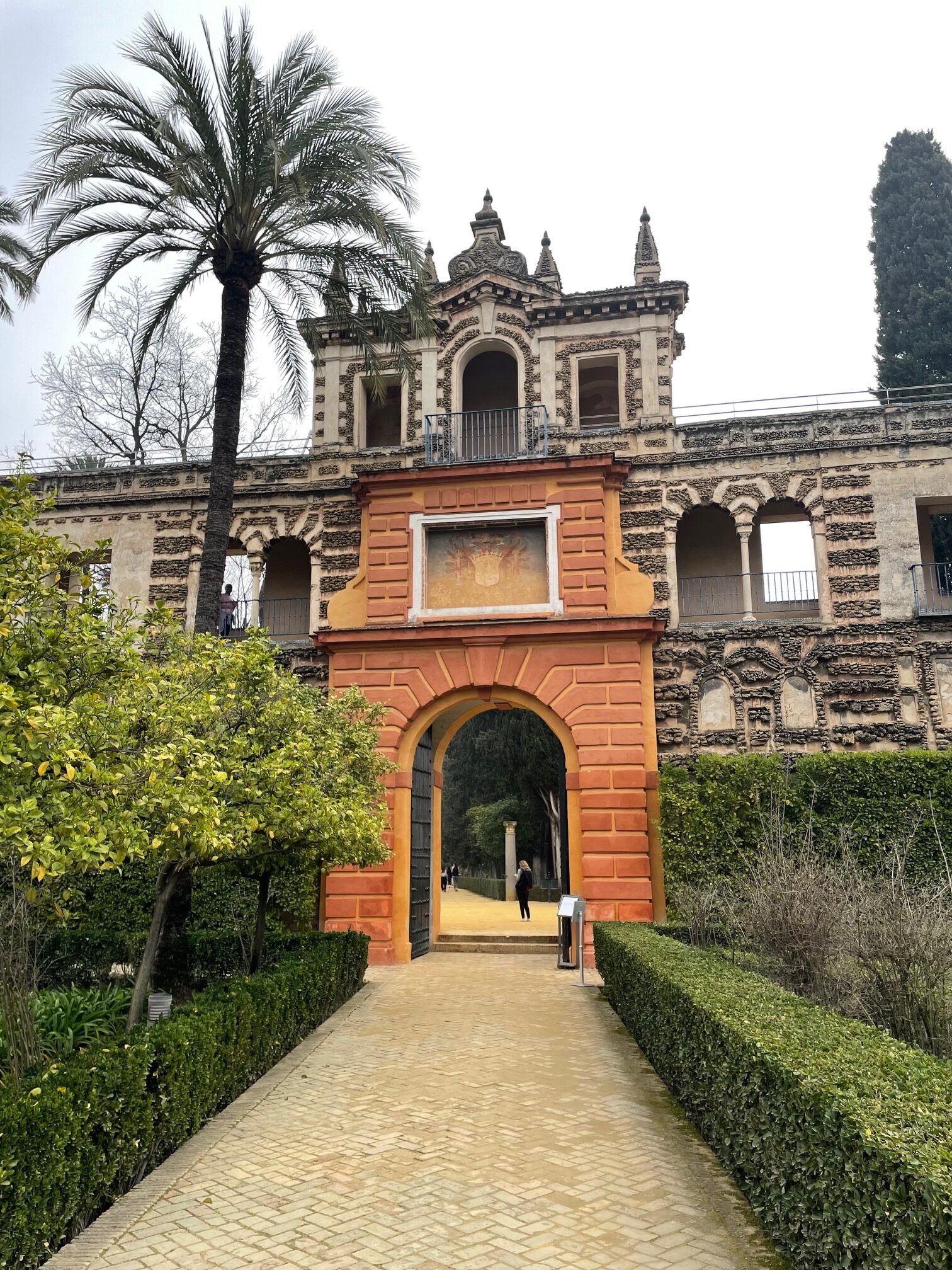
Start your exploration of the city at Seville’s best known attraction – its Royal Alcazar, a royal palace built on top of a Muslim fortress dating from the 10th century. The stunning design of the Alcazar is one of the best examples of Mudejar architecture, the mix of Islamic and Christian style that arose in the Iberian peninsula in the middle ages.
You can easily spend a couple hours at the Royal Alcazar even if you’re on a tight timeline. I recommend purchasing tickets in advance.


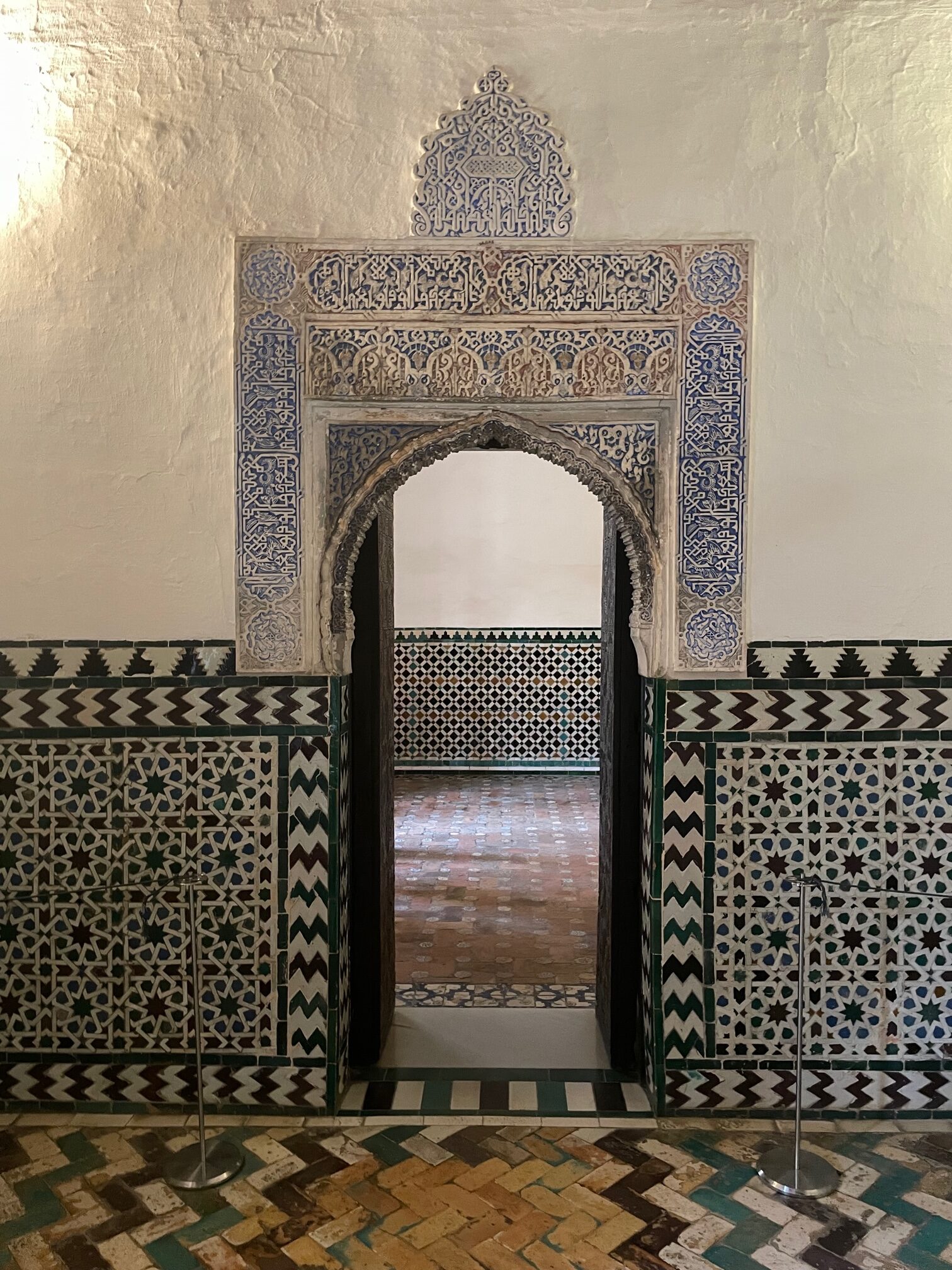
The Alcazar is especially known for its intricate tilework, which really is incredible to see in person.
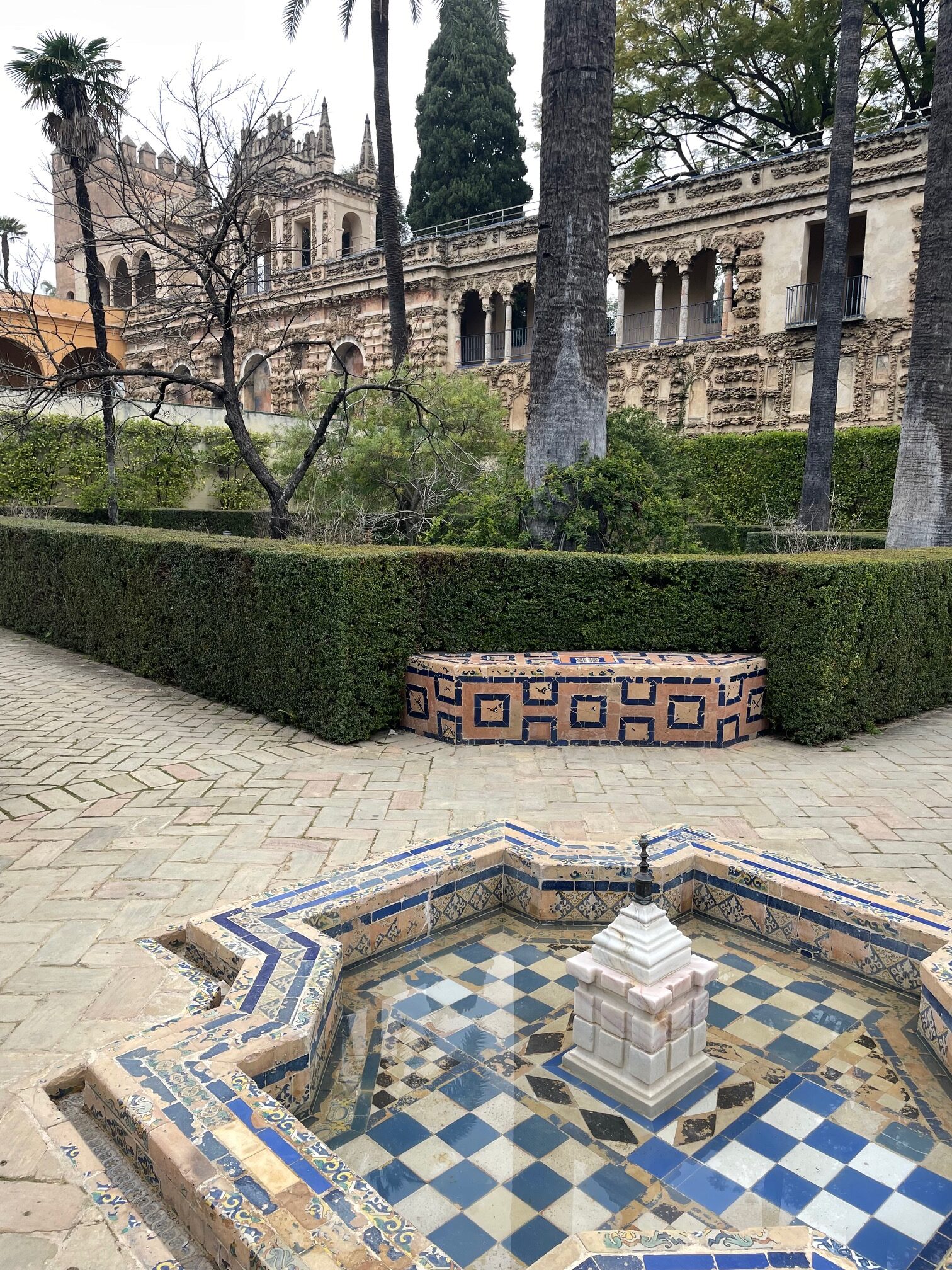
There are also extensive gardens at the Alcazar that are well worth a visit after you leave the palace itself. They’re home to interesting plants, beautifully tiled fountains and a stray peacock or two, and walking around the outside gives you a better sense of how this place used to be a fortress.
Plaza de Espana
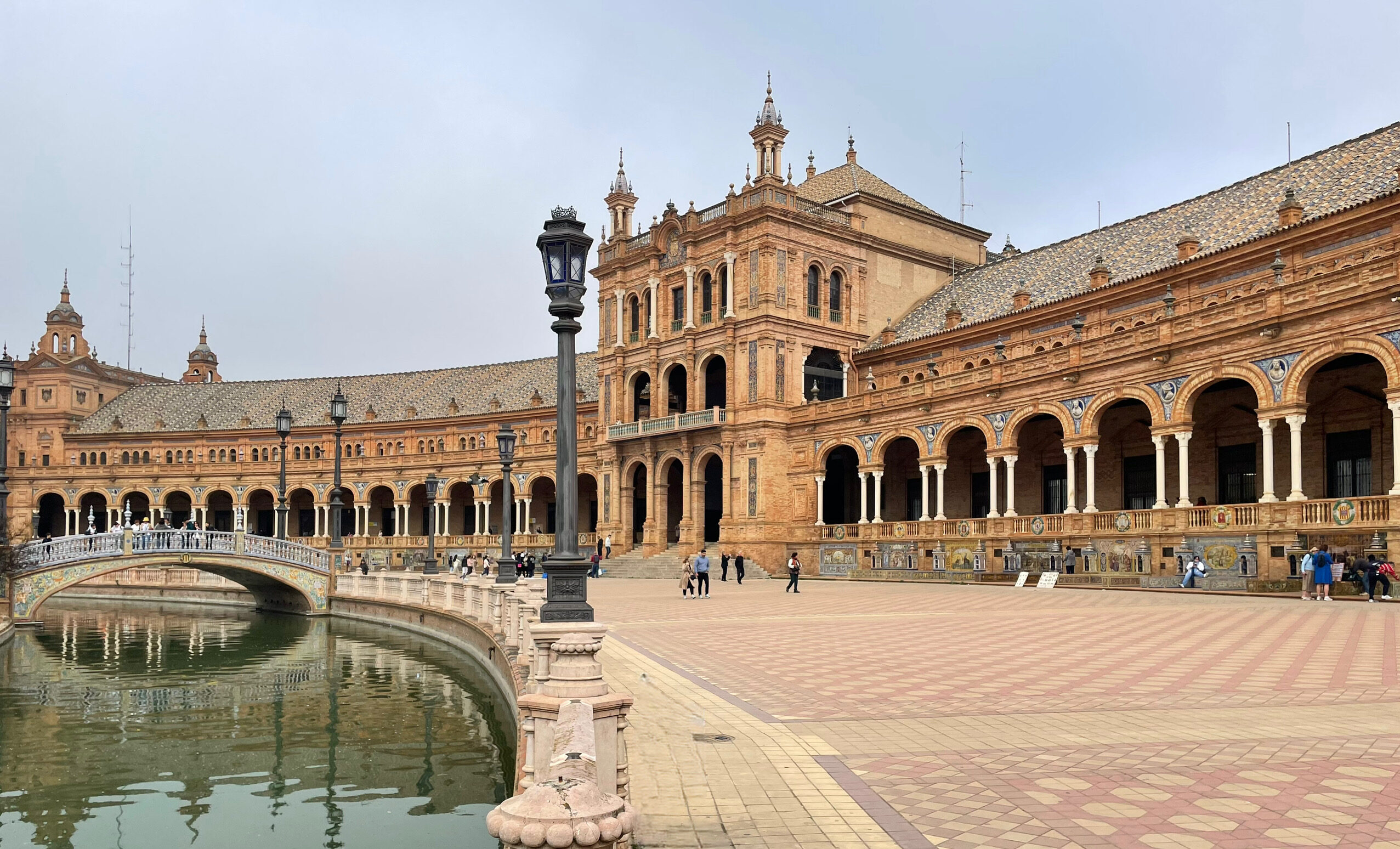
From the Royal Alcazar, head south past the University of Seville to Plaza de Espana, another architectural gem. Pretty much all European cities have a famous central square, but few of them look like Plaza de Espana does.

Built for the 1929 Ibero-American expo, the buildings around Plaza de Espana (now used as government offices) are adorned with even more amazing tilework and there’s also a canal, bridges and lots of benches from which to sit and take in the view. If you’re looking to do a family or couples photoshoot in Seville, this would be a great place for it.
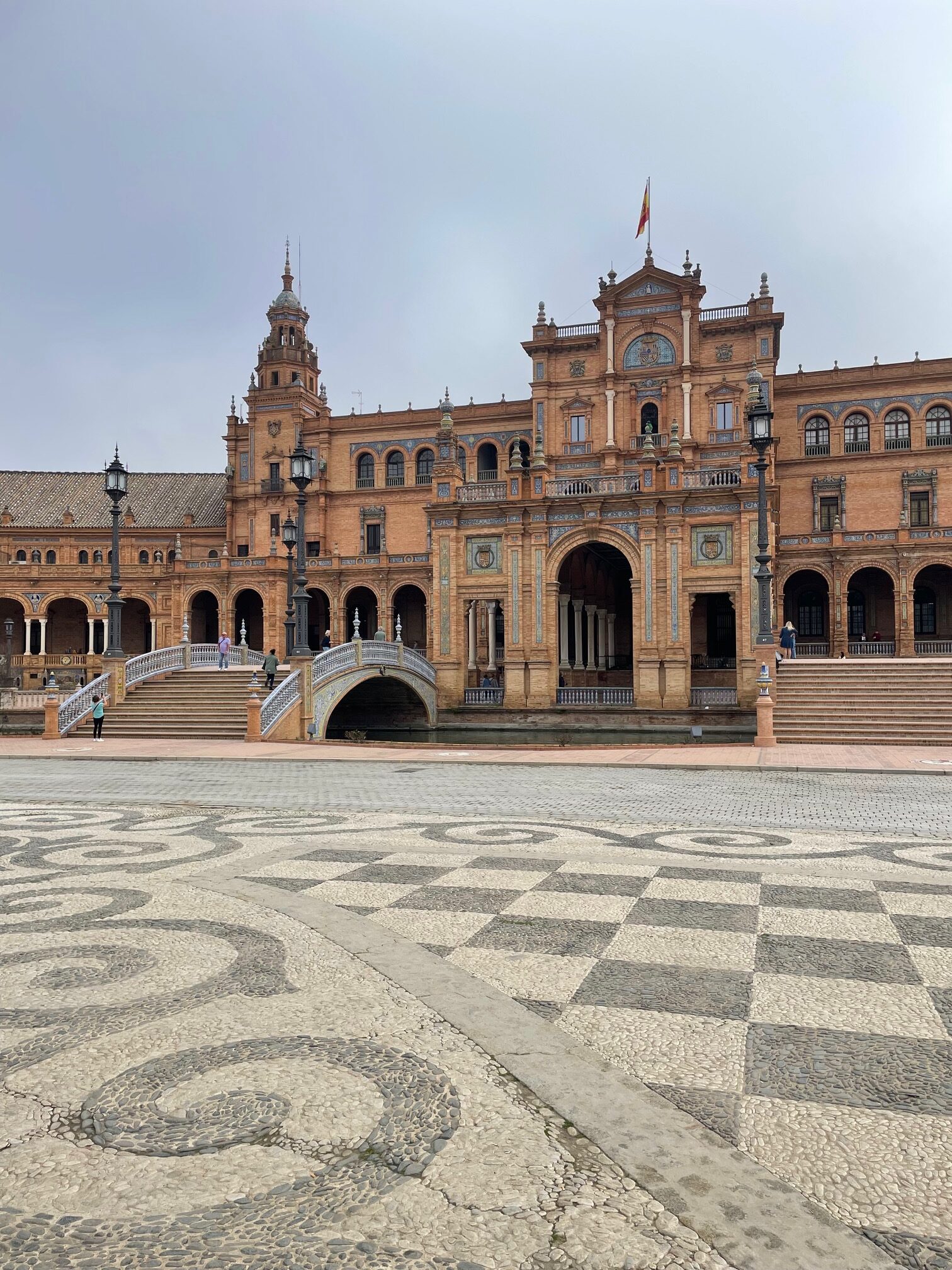

From Plaza de Espana you can cross the street to the shade of Maria Louisa Park (technically the plaza is in the park, but it feels much more park-like across the street). If you’re visiting Seville with kids, this is a great place to let them burn off energy, and there’s a playground right near the Plaza de Espana.
Santa Cruz Neighborhood (Seville’s Old Town)
You’ll see a decent amount of the Santa Cruz neighborhood, which is Seville’s Old Town and its former Jewish quarter, just by checking off the big tourist attractions, since it’s home to both the Alcazar and Giralda. But this is a delightful neighborhood filled with picturesque street views around every corner and it’s worth devoting some time to wandering here.
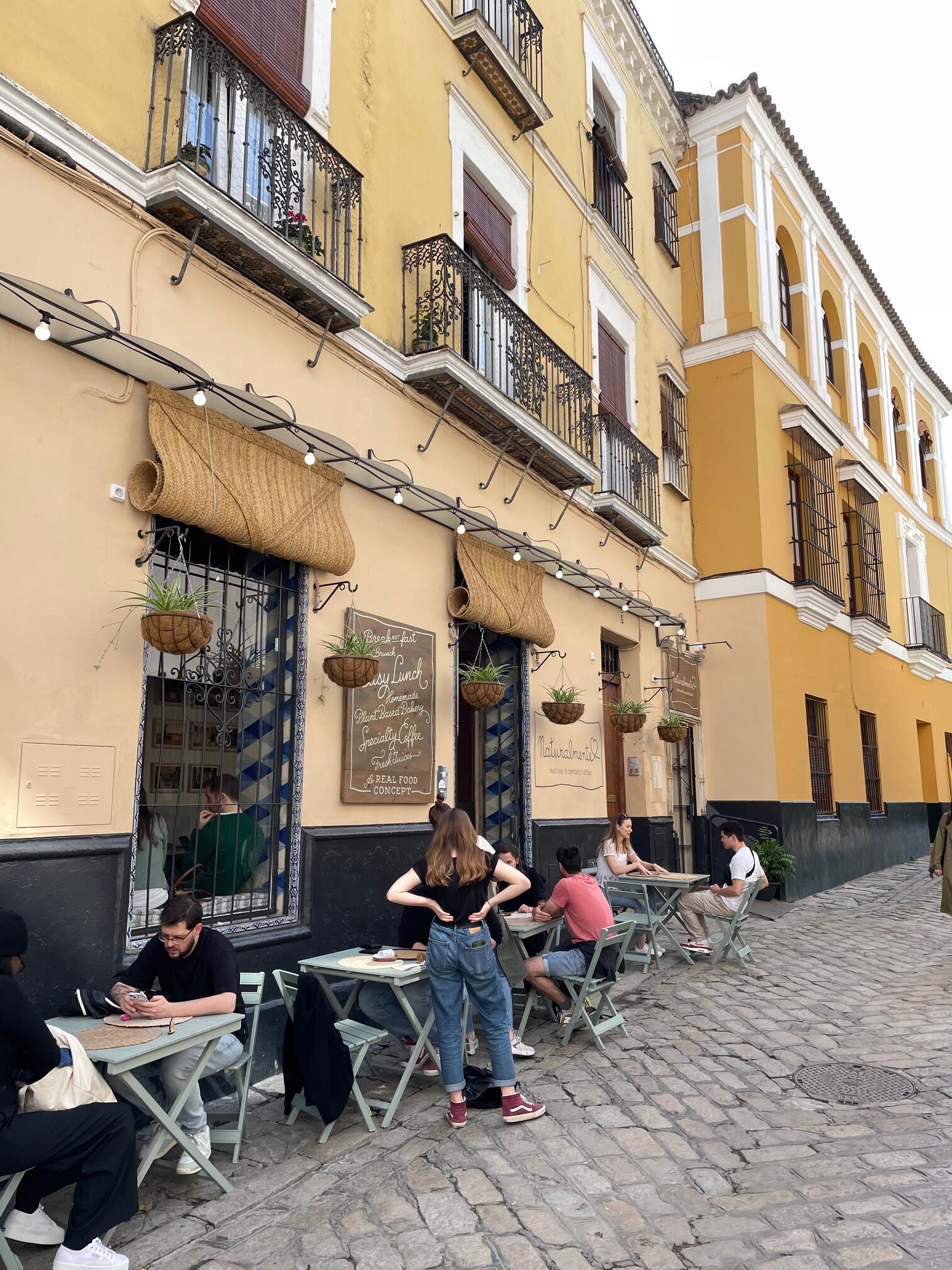
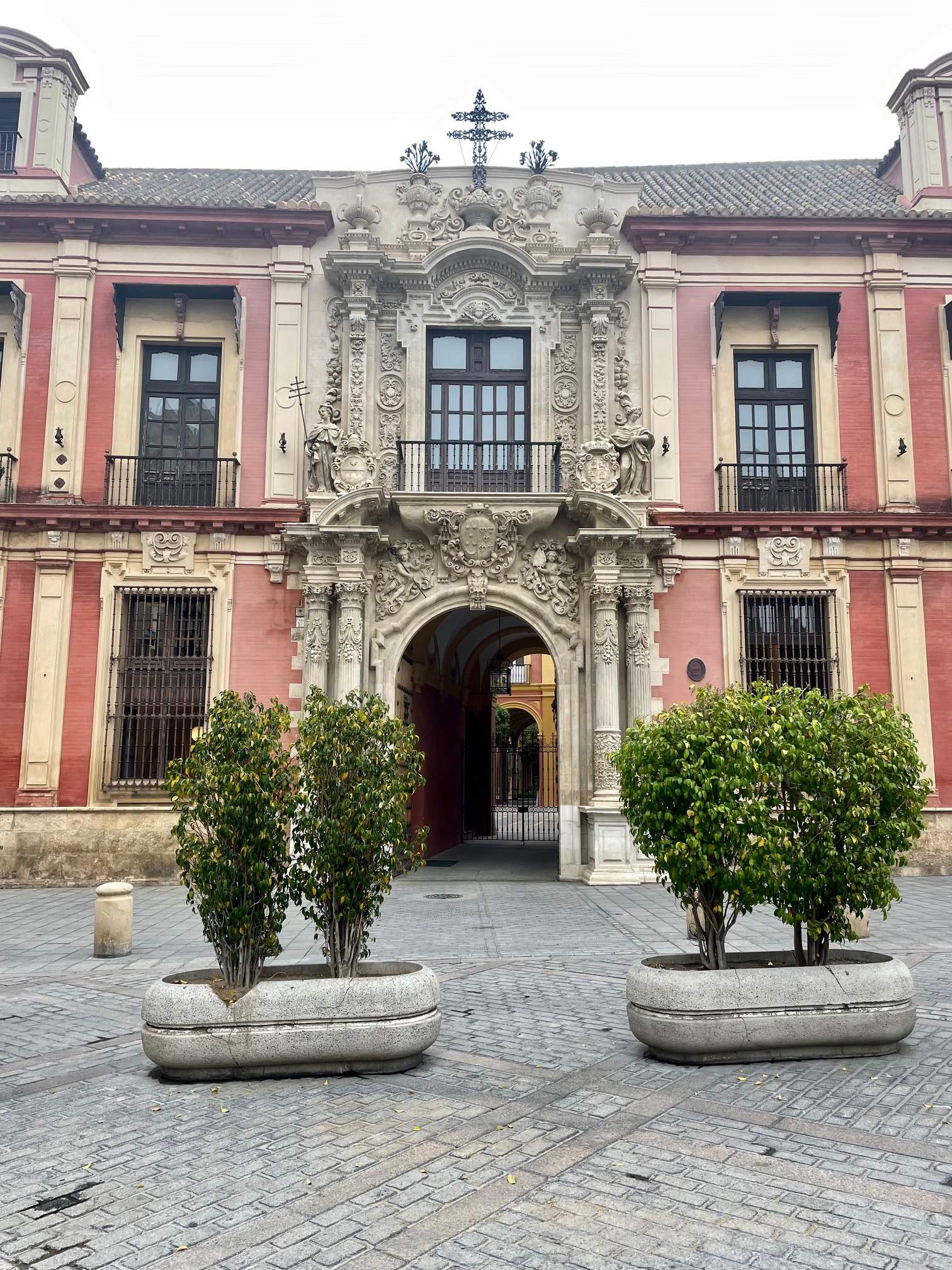
It’s also a great area to stay in, since it’s convenient to just about everything on this itinerary. We stayed at Hotel Amadeus and loved it.
What Tapas to Eat in Seville
The Santa Cruz neighborhood is also a great place to grab a tapas dinner. We especially enjoyed both the food and the vibe at El Pasaje Bar. As far as what to order, you’ll see lots of standard Spanish foods like patatas brava and tortas, as well as Andalusian specialties.
My favorite food in Seville by far was salmorejo, a thick, creamy cousin to gazpacho that’s made with only three ingredients: pureed tomatoes, olive oil and stale bread. Don’t ask me how, but somehow those ingredients (with no milk or cream) combine to make some of the creamiest, most delicious soup I’ve ever had. It’s often served topped with ham and/or hard-boiled egg but you can order it without either or both. You can also order salmorejo sauce as a topping for other tapas like tortas, which I highly recommend.

Churros and chocolate
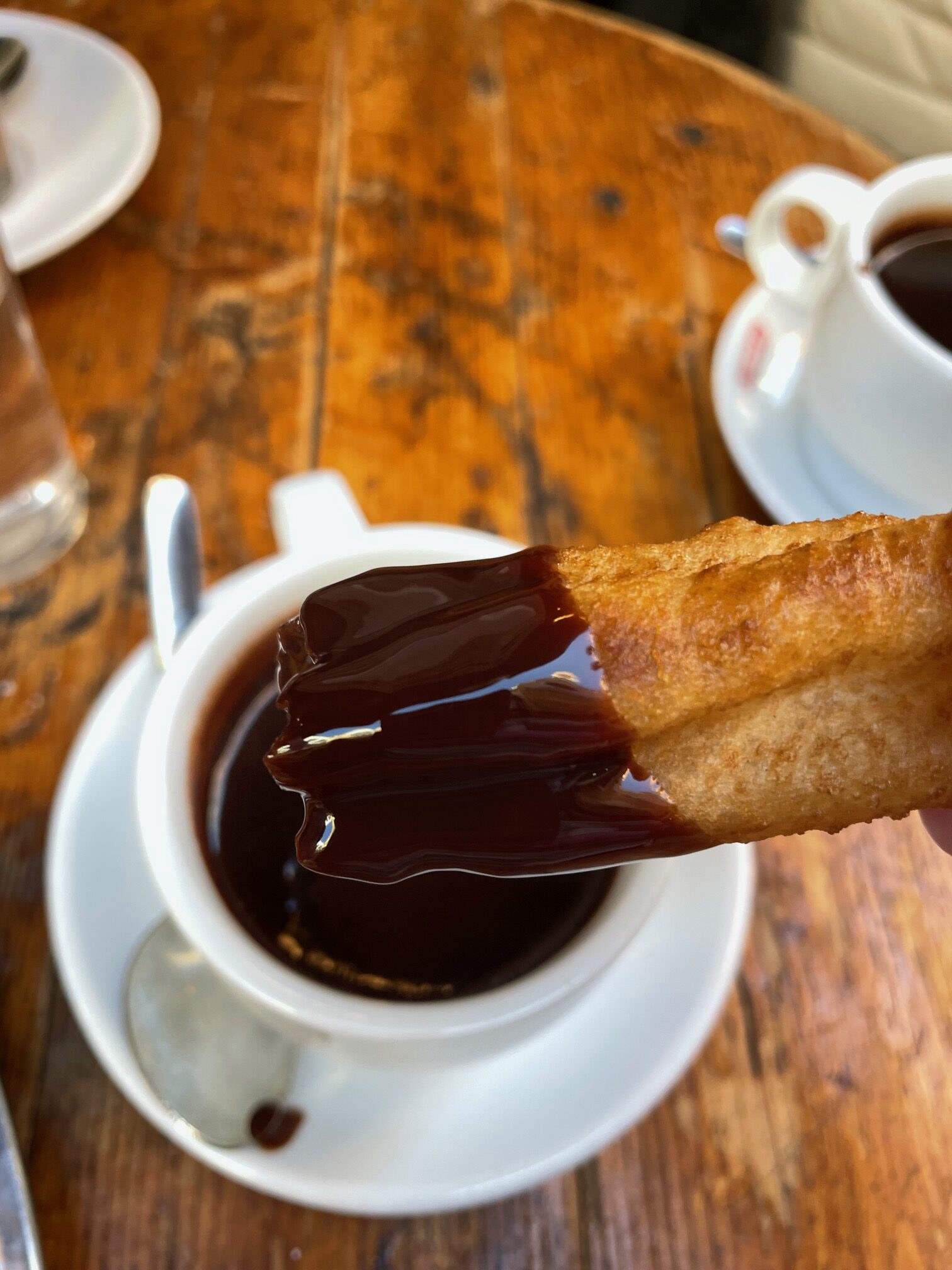
I’m incapable of going anywhere in Spain without eating churros and chocolate, and fortunately there are lots of great places for it in Seville. The most famous is Bar El Comercio, which has been operated by the same family since 1904. Americans think of churros as a dessert, but in Spain they typically have them for breakfast and well…when in Rome, as they say. No reason not to start your day out on a sweet note.

Seville Cathedral and Giralda
Plan to spend the rest of the morning visiting Seville’s Cathedral and climbing the famous Giralda (bell tower). As with the Alcazar, I recommend purchasing tickets in advance, although we didn’t and had only a modest wait to purchase tickets at the door (in March).

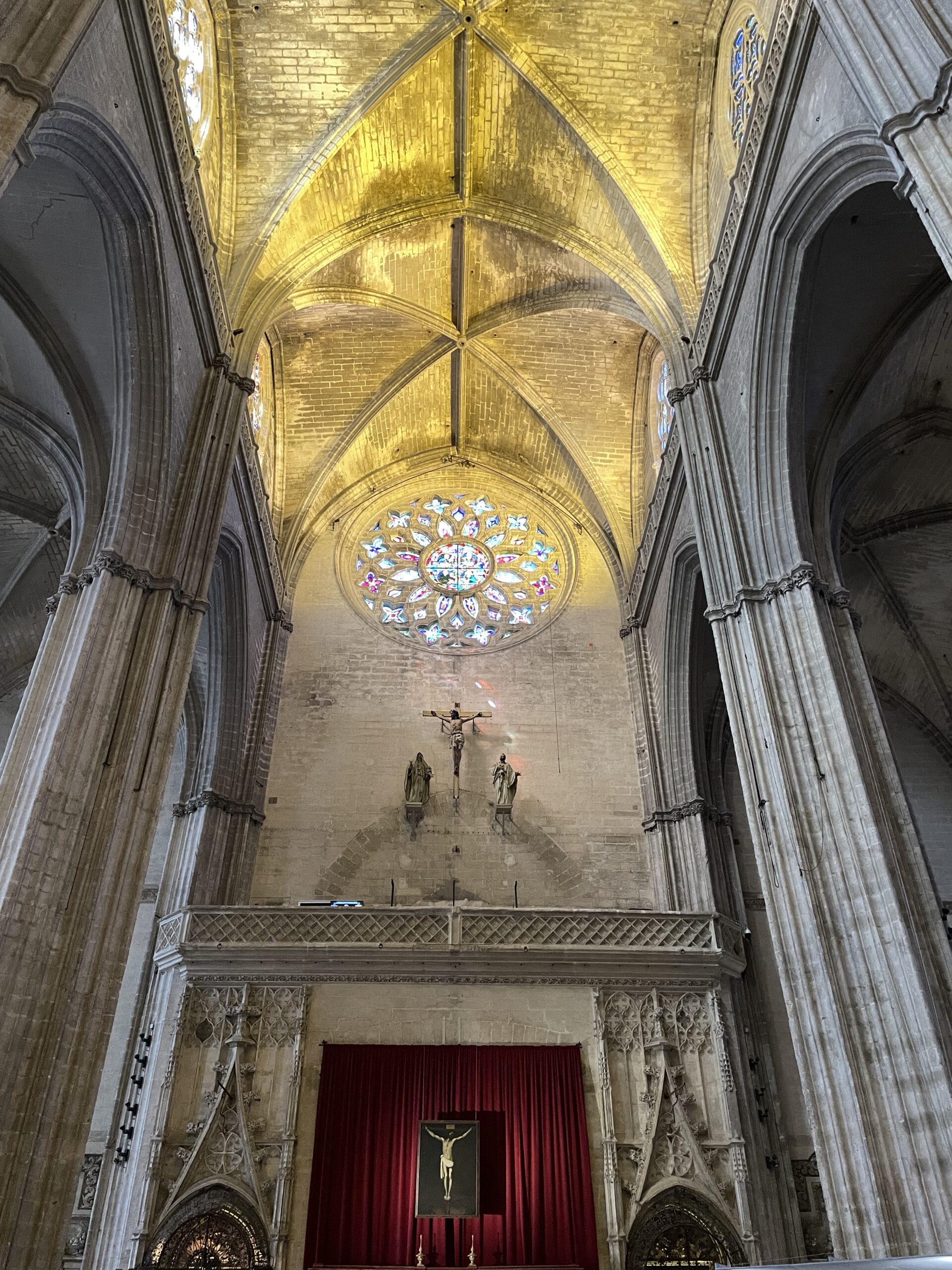
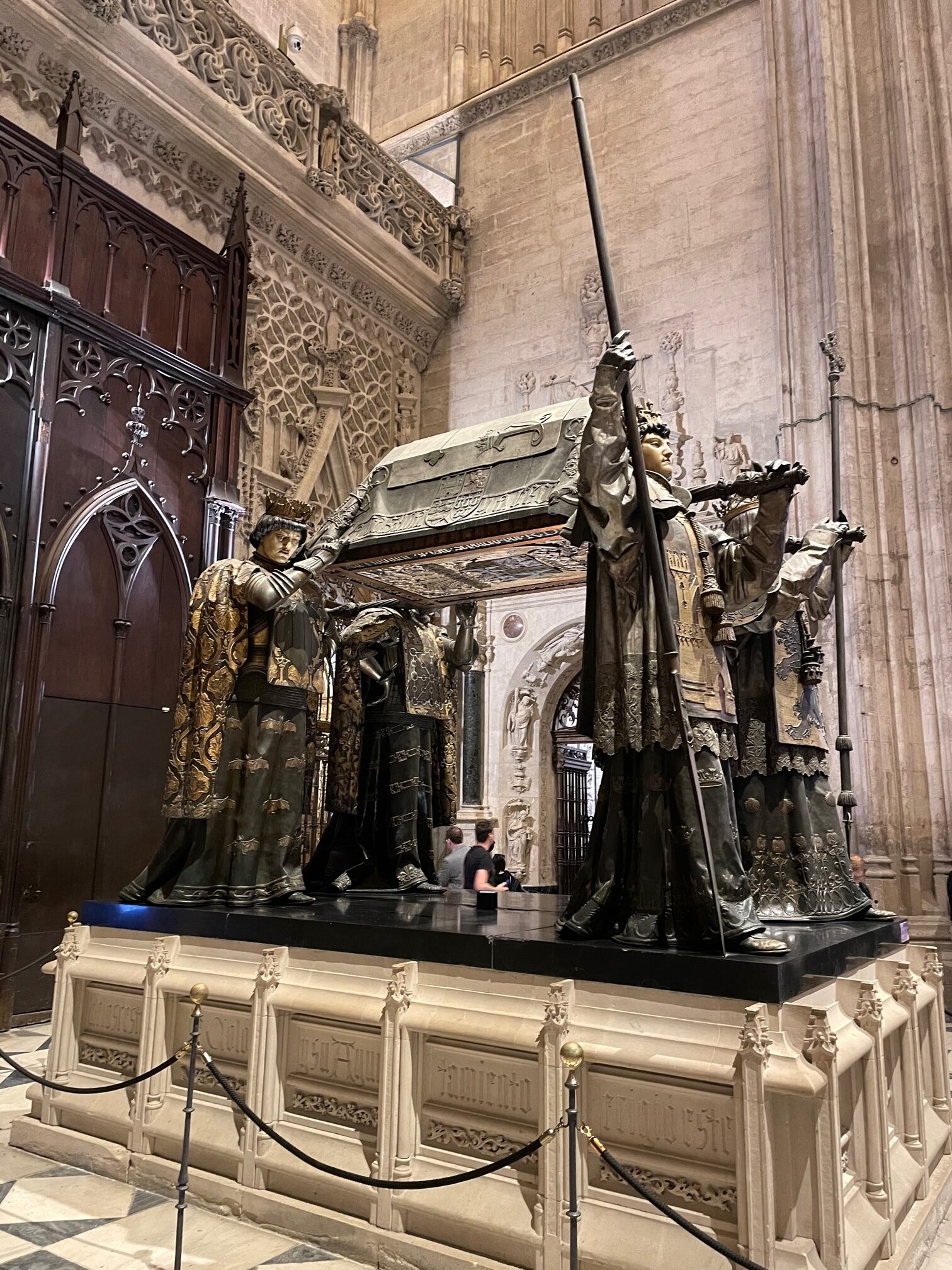
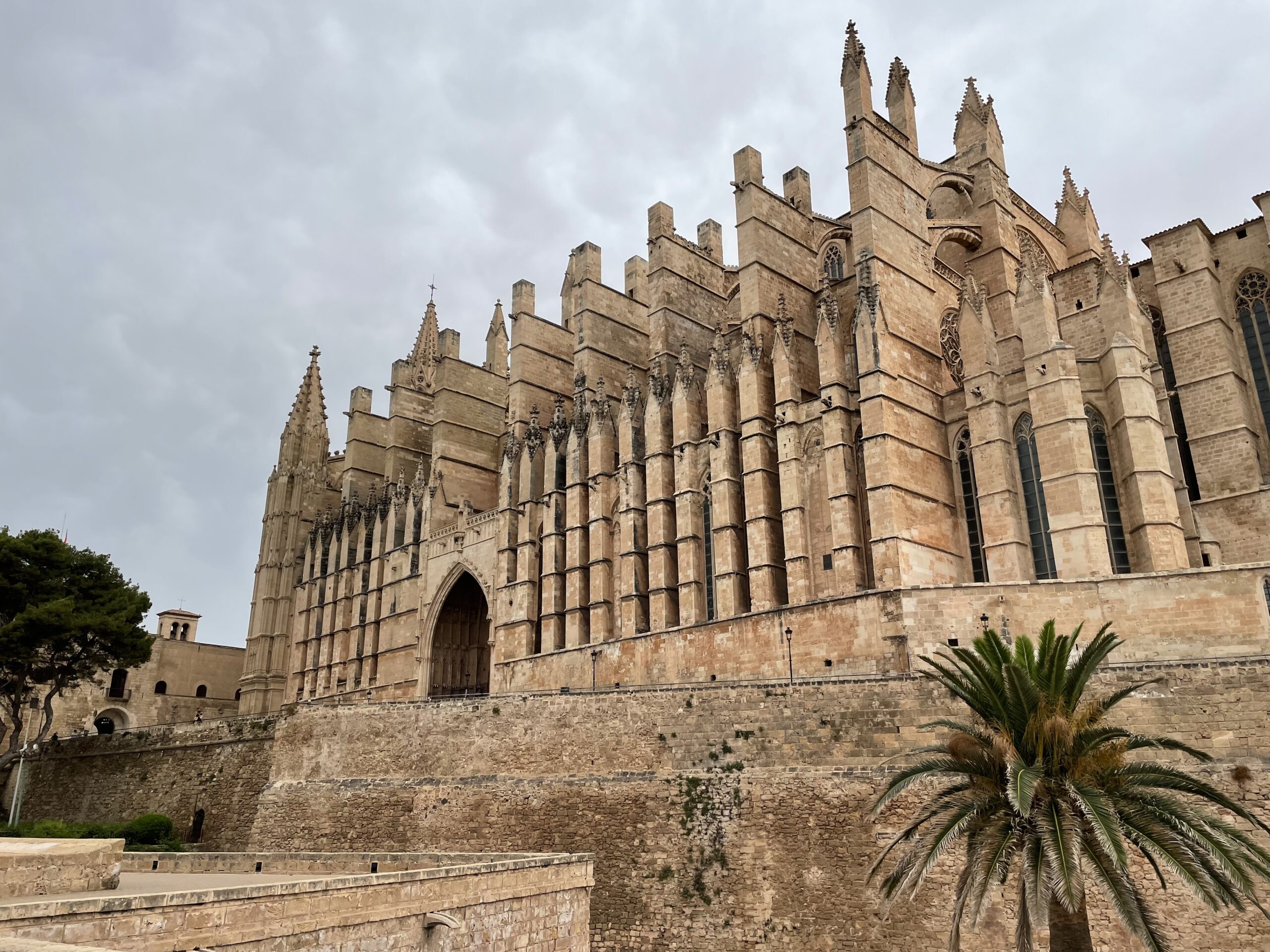
The Cathedral is probably best known as being the location of the tomb of Christopher Columbus (well, at least part of him; apparently it’s somewhat disputed whether or not his entire remains are there), but it’s a stunning Gothic cathedral that’s well worth a visit regardless of its famous resident.
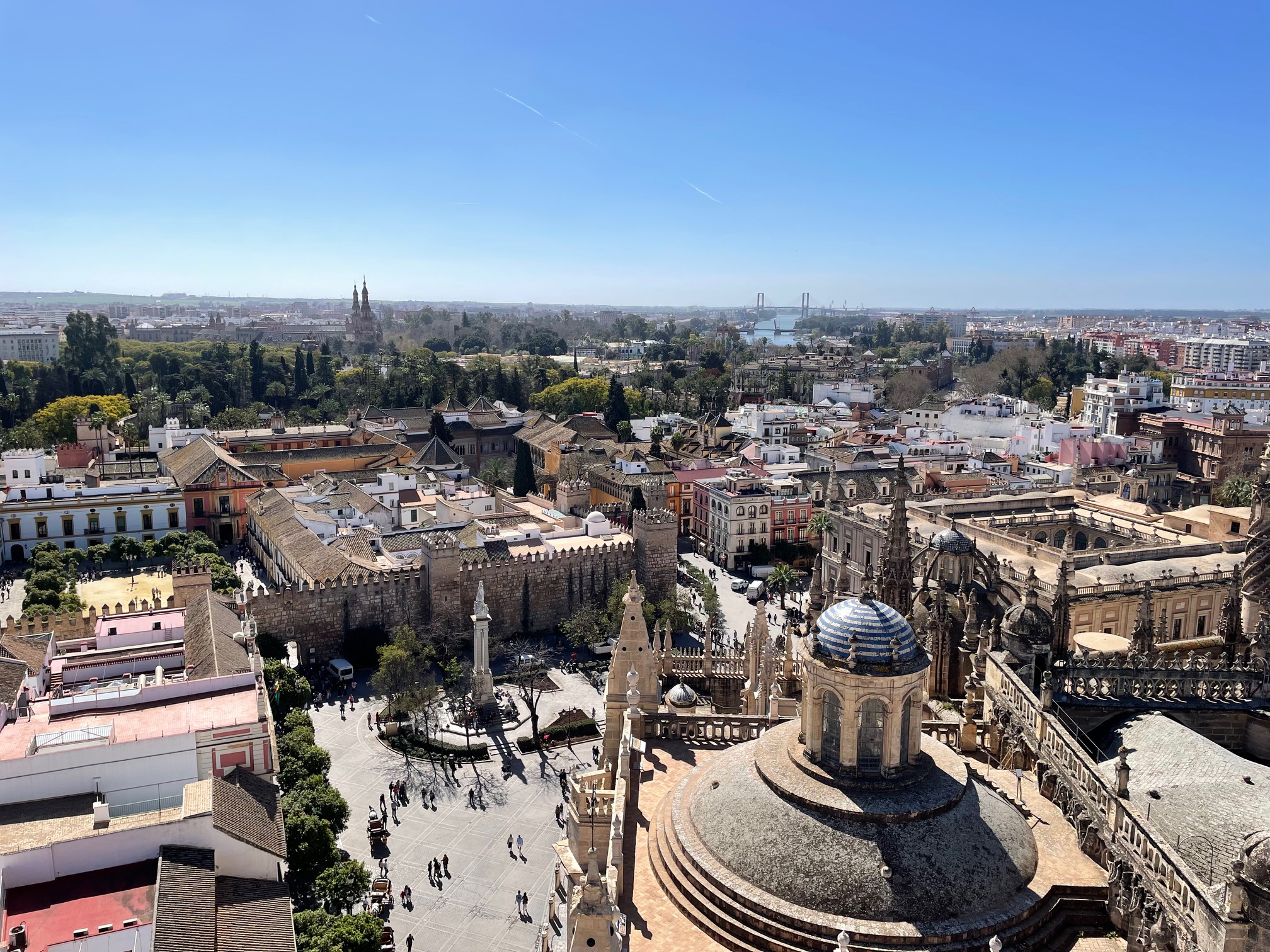
The Giralda climb is also very worth doing. Unlike many other cathedral bell towers, it’s a ramp instead of stairs, which makes it more kid-friendly (my 5 year old managed it easily). From the top you have nice views of Seville and the rest of the cathedral.
Torre del Oro
Not far from the Cathedral is the Torre del Oro, an imposing military fortress built in the 13th century when Muslims controlled Seville. Today it’s home to a small naval museum.
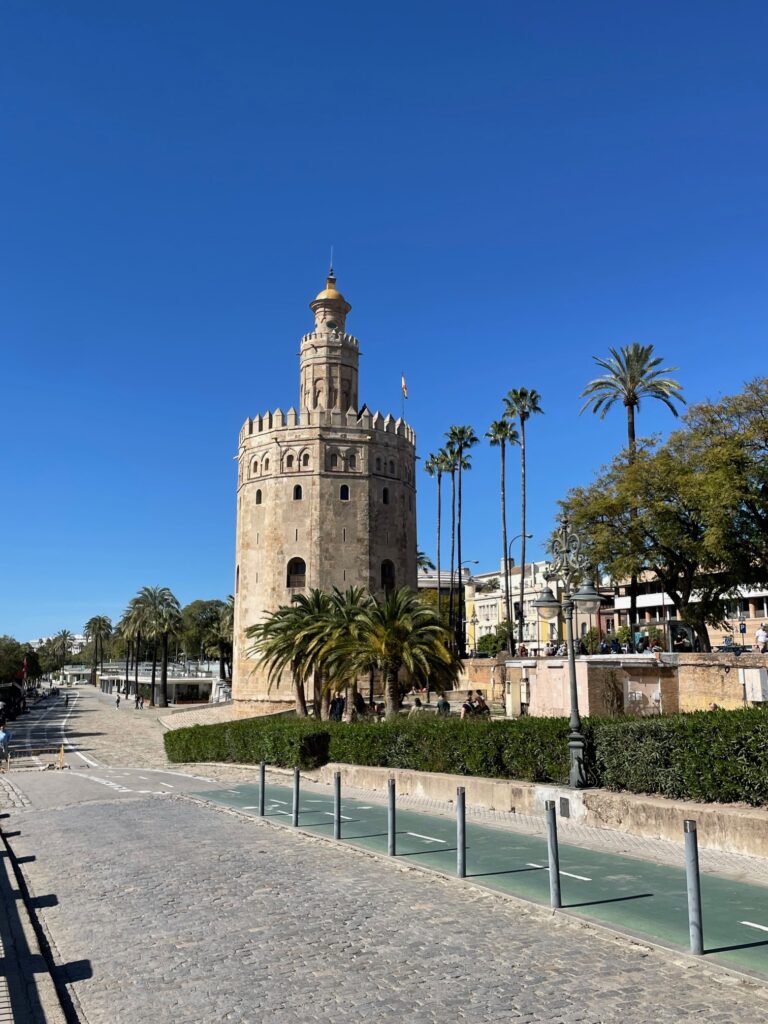
Torre del Oro is also the jumping off point for cruises of the Guadalquivir River, which show up on a lot of lists as a top thing to do in Seville. We did one, and honestly I’d skip it – there’s nothing you see from the river boat that can’t be seen just as well from land, and the narration left a lot to be desired. TripAdvisor reviews indicate I’m not alone in feeling like it wasn’t a highlight of our time in Seville. But if you’re looking to rest your legs without missing out on sightseeing, it could be a good option.
Triana Neighborhood
Triana is Seville’s “Left Bank” – just on the other side of the river from the Old Town, it’s home to an artsy crowd and is well known for its food market, which is right next to the Triana bridge. This neighborhood is lively and feels imbued with more local culture than Seville’s older areas. Triana is also known for its brightly colored buildings and a walk here is a must.
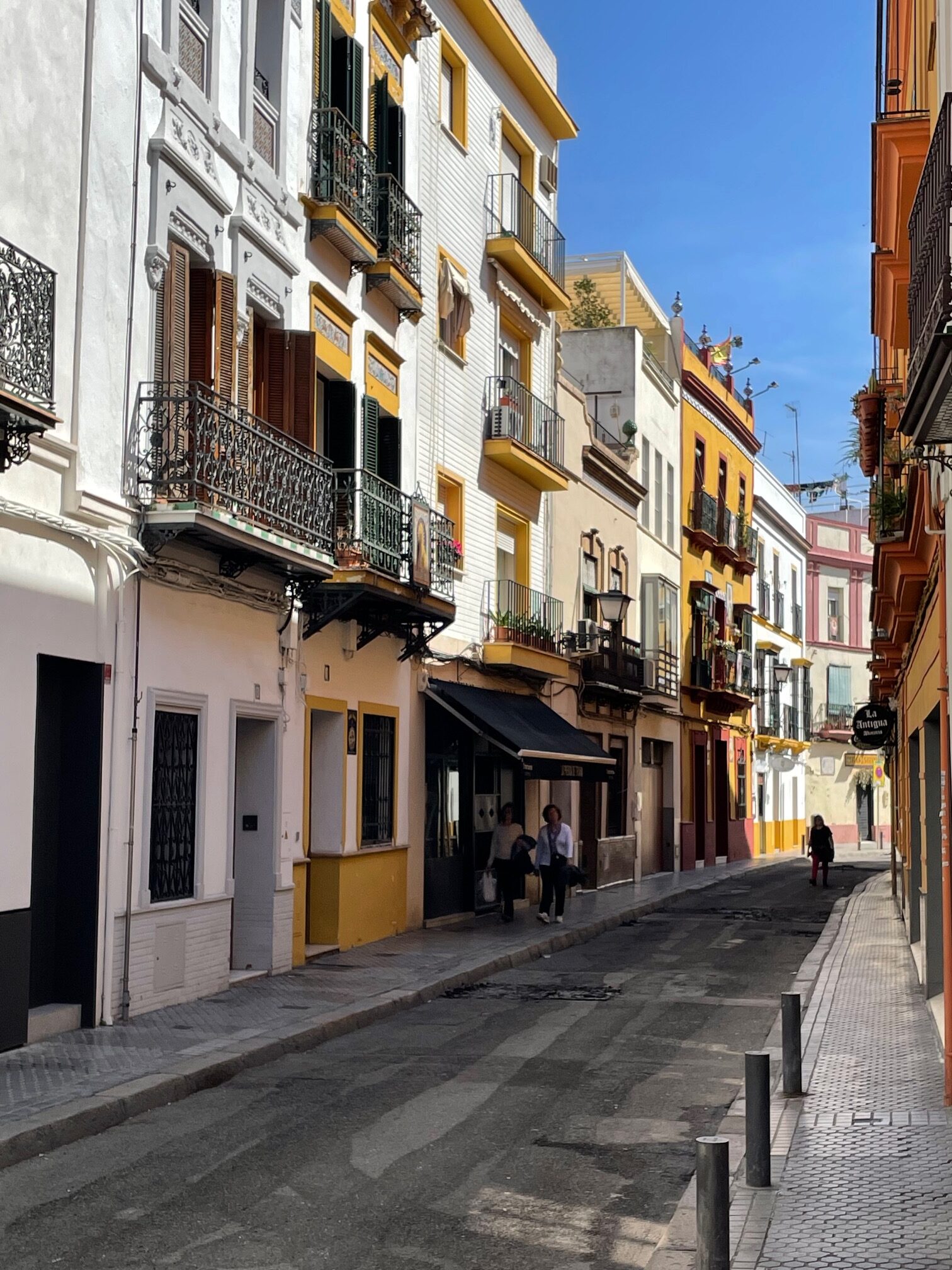

The Triana neighborhood is considered by some to be the birthplace of flamenco dancing, and its numerous flamenco bars are a great place to catch a show if that’s on your list to do in Seville.
When’s the Best Time to Visit Seville?
Seville is one of the hottest cities in Europe, and it’s inland away from cooling ocean breezes. Summer is oppressively hot, with temperatures averaging near 100 degrees in July and August. Spring and fall are generally considered the best times to visit. We visited in March and were blessed with beautiful 70 degree days, which is about average for that time of year.
What to Do If You’re Staying for Longer Than Two Days
Have a third day in Seville? I’d take a day trip to Cordoba (less than 1 hour away by train) or Granada (~2.5 hours). You could also check out the Setas de Seville (better known as the mushroom sculpture) or pay a visit to the flamenco museum, both of which I would have liked to fit into our itinerary.
Like this post? Save it for later.



What a gorgeous city. Convenient too; seeing it in 2 days gives travelers ample time to enjoy its beauty. The Cathedral looks incredible. Something about these old, stately buildings makes one feel at home the moment you wander inside these churches. Excellent blog post.
Ryan
Thanks Ryan! It really is a gorgeous city.
The photos are beautiful..such rich history..love all the architecture… the salmorejo sounds better than it looks 🙂 I’ll take your word on it!
Thanks Jennifer. Maybe not the best photo of the salmorejo, but I promise it’s delicious if you love a creamy tomato soup (which I do).